
Public Services Depend on Infrastructure That Works.
Networks, server deployment, solar power and electronic security for Nigerian government offices and public institutions.
Better Public Services Need a Reliable Technical Foundation.
Behind every government office, public institution and administrative service is an infrastructure environment that needs to support people, processes and technology.
Integrated Solutions Technology provides enterprise networking, IT hardware, server infrastructure, solar energy and electronic security solutions for government and public-sector facilities in Nigeria. From office connectivity and data centre equipment installation to surveillance, access control and technical support, we help institutions plan and implement suitable infrastructure within defined project requirements.
Public institutions rely on technology to support administration, communication, service delivery and internal operations.
Government employees need suitable networks and computing equipment. Departments require secure access to authorised systems. Facilities depend on electricity and appropriate physical security. Technical teams need maintainable equipment and reliable documentation.
When these foundations are inadequate, operational problems become harder to manage.
Unreliable connectivity can interrupt access to business systems. Unsupported hardware can increase maintenance challenges. Poorly documented networks can complicate upgrades. Inadequate power arrangements may affect offices and essential equipment.
Public-sector infrastructure also requires careful attention to procurement procedures, technical specifications and formal project acceptance.
Integrated Solutions Technology helps institutions assess their technical requirements and plan appropriate infrastructure improvements within agreed project responsibilities.
Support Institutional Operations
Establish suitable connectivity, computing and power infrastructure for approved government activities.
Improve Technical Accountability
Define equipment specifications, implementation responsibilities, relevant test requirements and project handover records.
Strengthen Facility Security
Provide appropriate surveillance, controlled access and network security systems for designated public-sector environments.
Plan for Long-Term Maintenance
Consider equipment compatibility, manufacturer support, technical documentation and future infrastructure requirements.
Practical technology infrastructure for public administration, institutional facilities and government service environments.
Infrastructure Solutions Built Around Institutional Requirements.
Government facilities vary widely in their operational needs.
A public service office may require workstations, connectivity and physical security. A ministry headquarters may need enterprise networking and server infrastructure. An institutional data centre may require equipment installation, structured cabling, testing and technical handover.
We help organisations develop suitable infrastructure scopes for their facilities and approved technical requirements.

Connect Departments, Offices and Approved Digital Systems.
Public institutions depend on network infrastructure to support communication, internal applications and authorised information exchange.
We help assess, install and upgrade suitable wired and wireless networks for government offices and institutional buildings.
- Enterprise network design and installation
- Structured LAN cabling
- Fibre optic cabling
- Wireless network solutions
- Network switches and equipment installation
- Network configuration and upgrades
- Cable labelling and port mapping
Network architecture should consider users, authorised applications, capacity, equipment compatibility and applicable institutional security requirements.
Technology Infrastructure Across Public Institutions.
Public-sector infrastructure needs extend beyond a single office type.
Each environment requires a suitable technical scope based on its responsibilities, services and existing systems.
Federal Ministries, Departments & Agencies
Enterprise office networking, ICT hardware, server infrastructure, appropriate security systems and technical documentation.
State Government Offices
Suitable wired and wireless connectivity, computing equipment, power systems and facility security infrastructure.
Local Government Administrative Offices
Appropriate office networking, computers, selected solar power solutions and technical support for approved administrative activities.
Public Service Centres & Administrative Facilities
Reliable business connectivity, appropriate workstations, surveillance and suitable access arrangements.
Government Data Centres & Server Rooms
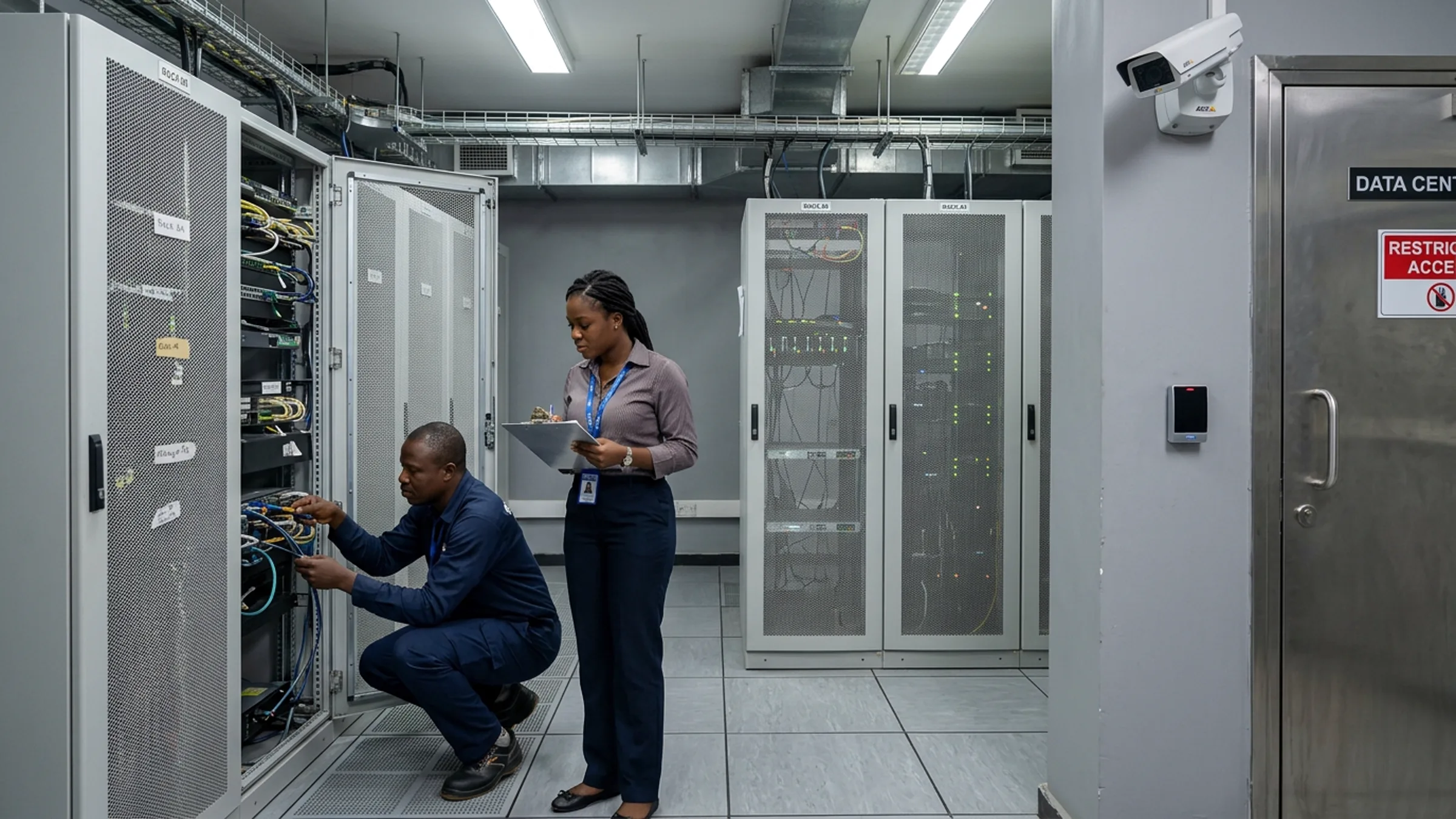
Physical equipment installation, racks, structured cabling, server deployment, verification and documented handover.
Public Agency Headquarters
Enterprise networking, suitable firewalls, ICT hardware, controlled access, CCTV and approved technical maintenance.
Government-Owned Training & Conference Facilities
Suitable network infrastructure, wireless access, computing equipment and facility security.
Multi-Location Public Institutions
Coordinated equipment deployment, technical documentation and appropriate network and support arrangements across institutional sites.
Public Infrastructure Needs More Than Equipment Purchases.
Ageing ICT Equipment
The challenge
Existing computers, servers and network devices may no longer meet operational requirements or may have limited manufacturer support.
How we address it
Review relevant equipment specifications, condition and compatibility before proposing suitable maintenance, upgrades or replacement.
Inconsistent Office Connectivity
The challenge
Government employees may encounter slow network connections, inadequate Wi-Fi coverage or poorly organised cabling.
How we address it
Assess relevant infrastructure and recommend suitable network equipment, structured cabling, wireless improvements or configuration changes.
Unreliable Power for Administrative Operations
The challenge
Electricity interruptions can affect selected workstations, network equipment and communication systems.
How we address it
Assess approved electrical loads and explore suitable solar, inverter and battery arrangements within the project's engineering requirements.
Incomplete Infrastructure Documentation
The challenge
Missing equipment inventories, network diagrams and port records can make maintenance and future procurement more difficult.
How we address it
Organise relevant infrastructure records, equipment information, testing results and handover documentation.
Facility Access & Security Requirements
The challenge
Public institutions may need to distinguish public-facing areas from offices, equipment rooms and other restricted spaces.
How we address it
Review suitable surveillance and access-control arrangements while considering accessibility, emergency escape and privacy obligations.
Difficulties Coordinating Technical Projects
The challenge
Procurement, installation, inspection, verification and operational handover may involve different departments and contractors.
How we address it
Define the approved technical scope, installation responsibilities, deliverables and acceptance process before work begins.
Accountability Should Be Part of the Technical Process.
A government infrastructure project should be clearly defined before equipment is purchased or installation begins.
Approved technical specifications, applicable procurement requirements, site conditions and project responsibilities help establish a sound basis for delivery.
Understand the Institutional Requirement
Review the facility, intended outcome, existing infrastructure and technical challenges identified by the institution.
Confirm the Approved Scope
Identify the relevant technical specifications, procurement documentation, equipment requirements and necessary project approvals.
Prepare the Implementation Plan
Define suitable equipment, installation activities, resource requirements, technical dependencies and acceptance criteria.
Carry Out Authorised Technical Work
Perform agreed installation and configuration tasks according to approved procedures, access arrangements and project responsibilities.
Verify, Document & Handover
Record appropriate equipment details, completed tests, relevant technical information and outstanding items for formal review.
Infrastructure That Supports Institutional Work.
Illustrative images of typical installations and work environments.
Government Office Networking
Structured cabling, networking equipment and appropriate connectivity supporting authorised administrative applications.

Public-Sector Server & Data Centre Infrastructure
Enterprise computing equipment, network racks and organised technical environments with relevant installation records.

Institutional Solar & Energy Systems
Suitable solar panels, inverters and energy storage infrastructure designed around assessed building loads.
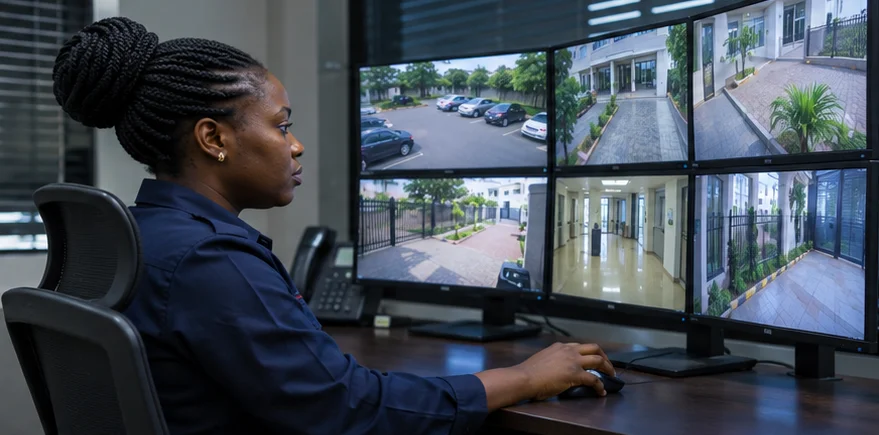
Public Facility Surveillance & Access Control
Appropriate CCTV, recording and controlled-entry equipment for designated institutional areas.
Questions Government Technology and Procurement Teams Ask.
Government offices may require reliable connectivity, workstations, network equipment, servers, storage, firewalls, appropriate power infrastructure and physical security systems.
The specific requirements depend on the institution's functions, user numbers, applications, existing architecture and applicable technical standards.
Integrated Solutions Technology offers networking, structured cabling, ICT hardware, servers, storage, data centre deployment, commercial solar, CCTV, access control, firewalls and IT technical support.
Services are delivered according to the approved project scope and applicable institutional requirements.
Suitable ICT equipment procurement can be considered against an institution's approved specifications.
Product availability, compatibility, licensing, warranty arrangements and procurement requirements should be confirmed during the sourcing process.
Wired and wireless network installations can be considered within an approved project.
The technical scope may include structured cabling, network switches, suitable wireless equipment, fibre connections and relevant configuration work.
Fibre optic cabling may be suitable for connecting buildings or equipment locations.
The installation requires appropriate design, route permissions, cable protection, compatible equipment and relevant testing.
Suitable wireless infrastructure can be deployed for approved institutional users and applications.
The design should consider building layout, network capacity, access permissions and separation of relevant user groups.
Suitable enterprise server and storage equipment can be considered within an approved infrastructure procurement and installation project.
Application integration, data hosting responsibilities and specialised platforms must be separately defined where required.
No. The appropriate computing architecture depends on the institution's applications, technical requirements, existing shared infrastructure and approved digital strategy.
Some organisations may rely on centralised, hosted or shared services instead of operating extensive onsite computing facilities.
Integrated Solutions Technology offers physical data centre equipment installation, rack-and-stack, infrastructure verification and related services.
Actual delivery depends on the site's security requirements, access authorisation, technical scope and relevant approvals.
Yes. Suitable solar and storage systems can support selected building loads when properly assessed and designed.
The system must be sized according to measured electricity use, operating hours, electrical infrastructure and intended backup or energy objectives.
Requirements depend on equipment, lighting, cooling, operating schedules, peak demand and the intended role of solar power.
A qualified assessment is required to establish appropriate generation, inverter and storage capacity.
An appropriately engineered power arrangement may support identified critical loads.
However, continuity requirements, electrical protection, transfer arrangements and compatibility with existing UPS or backup systems must be evaluated before implementation.
Suitable CCTV systems may be installed for legitimate facility security objectives within the approved scope.
Surveillance must respect applicable privacy, access-control, recording and data-protection obligations.
Yes. Suitable electronic access systems may be used to manage permissions for designated offices, equipment rooms and other restricted spaces.
Safe emergency exit, accessibility and building safety requirements remain essential.
Suitable gate automation may be considered where technically appropriate.
Installation must account for authorised entry procedures, pedestrian and vehicle safety, protective equipment and emergency release requirements.
Enterprise firewalls may be deployed within an approved network-security design.
The equipment, configuration, licensing and support requirements should reflect the institution's technical policies and applicable government standards.
No. Firewall deployment is one technical activity.
Cybersecurity assurance requires broader governance, authorised system design, access management, operational controls and relevant assessments.
NITDA states that federal public institutions must submit proposed IT projects for clearance under its applicable framework.
The institution is responsible for determining and obtaining the necessary approval. The exact requirements should be checked against the current rules and the project's classification.
NITDA's published guidance indicates that the clearance process begins during project conceptualisation.
Institutions should review applicable procedures before committing to an IT implementation project.
Regulatory clearance is not automatically part of infrastructure supply or installation.
Any administrative assistance would require a separately agreed scope and appropriate authority. Approval decisions remain with the relevant government body.
Relevant technical requirements, equipment schedules and bills of quantities may be considered within an agreed consulting or implementation-planning scope.
The institution remains responsible for its formal procurement requirements, approvals and decisions.
Participation in any tender depends on the company's verified eligibility, relevant registrations, capabilities and the procurement notice.
No statement on this website should be interpreted as evidence of current tender eligibility or government vendor approval.
Costs vary according to the equipment, technical specifications, number of locations, installation conditions, project scope and required testing.
A suitable quotation should be based on approved requirements and relevant procurement procedures.
Existing networking equipment and cabling can be assessed for relevant limitations.
Approved improvements may include equipment replacement, better wireless coverage, suitable configuration changes and updated technical documentation.
Onsite IT Technical Support is part of Integrated Solutions Technology's service portfolio.
The scope, site access, location coverage and response arrangements must be agreed for the particular engagement.
Multi-site projects can be reviewed according to the facilities, equipment, technical tasks and available resources.
Implementation responsibilities, schedules and documentation should be defined for each relevant location.
Depending on the approved scope, records may include equipment inventories, installation reports, relevant test results, cable and port maps, diagrams and formal handover information.
The institution's contract and acceptance procedures determine the required deliverables.
Technical specifications should be reviewed before procurement or deployment.
Product information, compatibility requirements and applicable verification criteria should be checked against the approved scope. Formal acceptance remains subject to the institution's agreed process.
Maintenance may be arranged under a defined support agreement.
The contract should specify covered equipment, service levels, support hours, responsibilities and exclusions.
An authorised representative can provide the project location, technical requirements, equipment specifications, scope and available tender or procurement documentation.
A quotation should follow the appropriate purchasing process and applicable approvals.
Contact Integrated Solutions Technology with the institution's approved requirements or initial technical needs.
We can review the information and discuss a suitable assessment, project scope or procurement response, subject to applicable procedures.
Plan Your Next Public-Sector Infrastructure Requirement
Share the site, project or technical requirement and Integrated Solutions Technology can help define the appropriate next step.
Better Infrastructure Begins With a Clear Plan.
From enterprise networking and ICT hardware to solar power, facility security and technical maintenance, public institutions depend on systems that need to be properly specified, installed and managed.
Whether you're planning a new administrative facility, upgrading existing systems or preparing an approved infrastructure project, Integrated Solutions Technology can help you assess the technical requirements and develop a suitable proposal.