
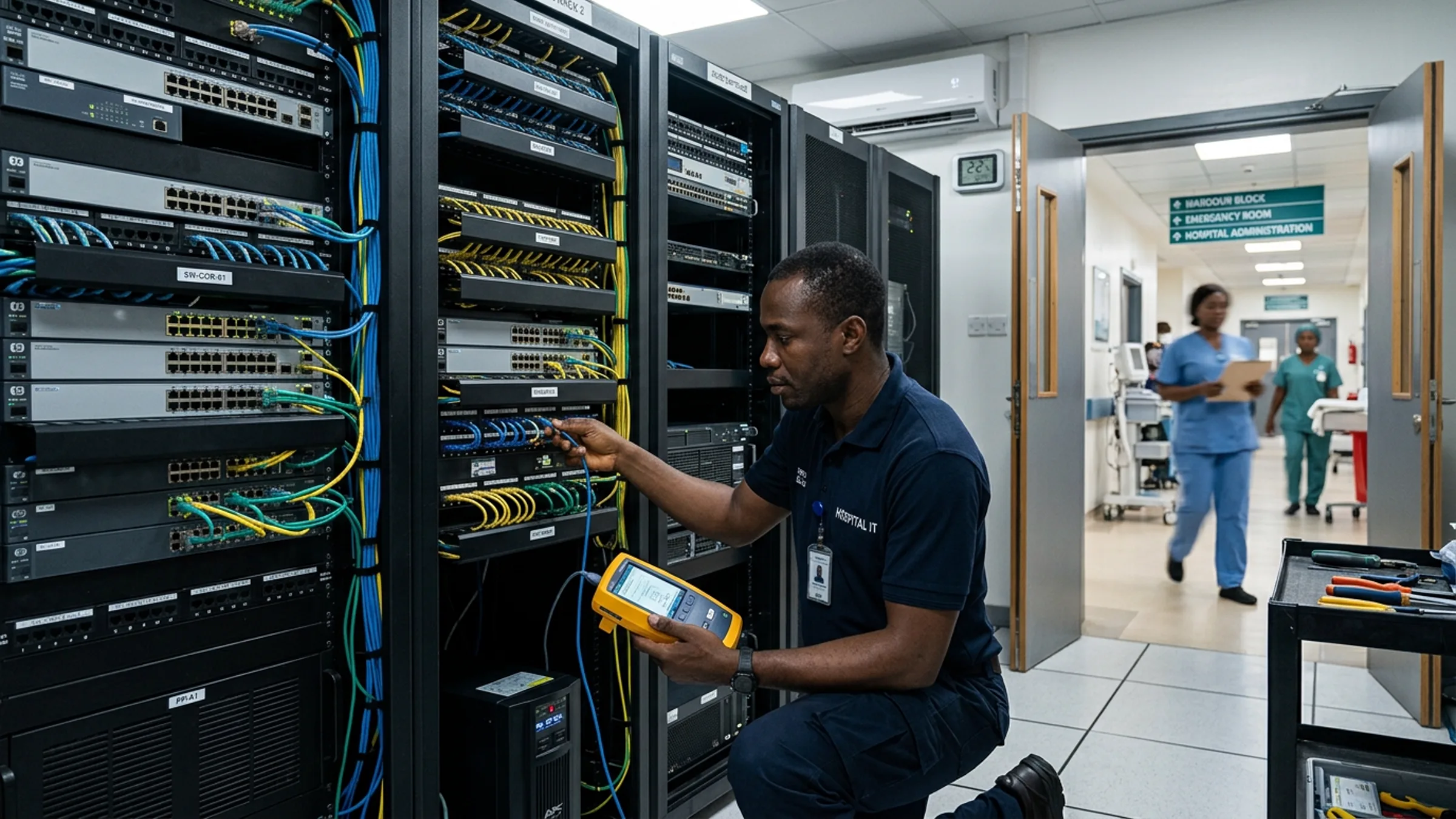
Better Care Needs Dependable Infrastructure Behind It.
Solar backup, networks, server infrastructure and security for hospitals, clinics and laboratories in Nigeria.
A Healthcare Facility Cannot Afford Infrastructure Guesswork.
When healthcare professionals are focused on their patients, the systems supporting their work need to be properly planned, connected and maintained.
Integrated Solutions Technology provides solar energy, networking, enterprise IT and electronic security solutions for hospitals, clinics, diagnostic centres and medical facilities in Nigeria. From healthcare facility connectivity and server infrastructure to solar power, surveillance, controlled access and technical support, we help healthcare organisations establish supporting infrastructure around their operational requirements.
Behind every hospital reception desk, diagnostic department and administrative office is a network of supporting systems.
Power is needed for lighting, communication and essential equipment. Network infrastructure connects approved workstations, applications and departments. Servers and storage may support clinical administration and other digital systems. Surveillance and controlled access help facilities manage their premises.
When these supporting systems are inadequate, healthcare operations become more difficult.
A network interruption can affect access to digital information. Poorly designed power infrastructure can leave selected equipment exposed to interruptions. Uncontrolled access may compromise restricted spaces. Ageing IT equipment can complicate maintenance and expansion.
Healthcare facilities therefore require a more considered approach than simply installing standard office technology.
Integrated Solutions Technology helps healthcare organisations evaluate relevant infrastructure needs and develop suitable solutions around the facility's layout, operations and technical requirements.
Support Operational Continuity
Plan appropriate power and infrastructure arrangements for identified facility loads and business-critical supporting systems.
Connect Departments & Workspaces
Deploy suitable network infrastructure for authorised applications, administrative systems and connected devices.
Strengthen Facility Security
Provide appropriate surveillance and access controls for designated entrances, administrative areas and restricted spaces.
Make Infrastructure Easier to Maintain
Improve relevant equipment organisation, technical documentation and ongoing support arrangements.
Supporting the technology, power and facility infrastructure behind modern healthcare operations.
Supporting the Systems That Support Healthcare.
Healthcare buildings contain different operating environments with different requirements.
A hospital's administration network is not the same as its medical equipment environment. A clinic's solar power requirements may differ substantially from those of a diagnostic centre. Public reception spaces also have different security needs from restricted rooms.
We help healthcare organisations identify suitable infrastructure solutions while respecting the boundaries between general technology services and specialist clinical systems.

Connect the Right People, Departments and Systems.
Modern healthcare facilities rely on digital connectivity for administration, communication and approved information systems.
We help organisations assess, install and upgrade suitable wired and wireless networks for healthcare buildings and supporting business environments.
- Network design and installation
- Structured LAN cabling
- Fibre optic cabling
- Enterprise wireless network solutions
- Network equipment installation
- Network configuration and upgrades
- Cable labelling and port mapping
Network design should account for authorised users, application requirements, appropriate traffic separation and the technical responsibilities associated with connected medical devices.
Technology for the Spaces Behind Patient Care.
Healthcare infrastructure requirements vary according to the type of facility, the services provided and the equipment involved.
General & Specialist Hospitals
Appropriate enterprise networks, supporting power infrastructure, administrative IT systems and facility security arrangements.
Private Clinics & Medical Practices
Suitable connectivity, workstations, electronic security and appropriately sized power systems supporting approved facility requirements.
Diagnostic & Medical Imaging Centres
Relevant networking, storage and supporting electrical infrastructure, with specialist requirements for diagnostic equipment assessed separately by qualified personnel.
Medical Laboratories
Suitable business IT connectivity, controlled access and infrastructure planning, with laboratory equipment, environmental and specimen-storage requirements handled by appropriate specialists.
Dental & Specialist Medical Centres
Networking, suitable computing infrastructure, facility surveillance and power planning around approved non-clinical and specialist-assessed loads.
Hospital Administration & Records Departments
Network connectivity, enterprise computing, storage and appropriate access controls for administrative environments.
Medical Equipment & Server Rooms
Suitable equipment racks, network infrastructure, physical access restrictions and supporting environmental arrangements.
Multi-Branch Healthcare Organisations
Consistent infrastructure planning, appropriate technical records and agreed support arrangements across clinics or medical offices at different locations.
Address the Weak Points Behind Your Healthcare Operations.
Unreliable Power Infrastructure
The challenge
Power interruptions may affect lighting, communication equipment, workstations and other essential activities.
How we address it
Review relevant electrical demand and identify appropriate solar, hybrid and storage options. Critical clinical loads must be assessed under suitable specialist engineering and safety requirements.
Connectivity Gaps Between Departments
The challenge
Staff may experience unreliable network access or limited connectivity between approved systems and locations.
How we address it
Assess network design, equipment condition, cabling, wireless coverage and appropriate access arrangements.
Ageing Servers & Digital Infrastructure
The challenge
Existing computing and storage equipment may have insufficient capacity, limited support or increasing maintenance requirements.
How we address it
Review relevant hardware and infrastructure, then consider suitable replacement, upgrade or deployment options.
Inadequate Control Over Restricted Areas
The challenge
Healthcare facilities may require different entry permissions for public areas, administrative spaces, stores and equipment rooms.
How we address it
Define the access requirements and assess compatible electronic security systems that maintain appropriate safety and emergency access.
Sensitive Data & Network Security Concerns
The challenge
Healthcare organisations often process sensitive personal information while relying on connected systems.
How we address it
Assess suitable network infrastructure and firewall controls within the agreed scope, while leaving legal compliance, clinical-system security and formal cybersecurity assurance to the responsible qualified teams.
Disorganised Technical Support
The challenge
Undocumented equipment, ageing network connections and unclear support responsibilities can make maintenance more difficult.
How we address it
Improve relevant technical records and establish appropriate maintenance or upgrade arrangements based on the facility's requirements.
Healthcare Infrastructure Demands a More Considered Approach.
A healthcare technology project should begin with understanding the building, the people using it and the systems that could be affected.
The correct solution depends on facility requirements, site conditions, technical dependencies and clearly defined responsibilities.
Understand the Facility
Review the type of healthcare establishment, relevant departments, existing infrastructure and the improvements required.
Identify Operational & Technical Priorities
Define appropriate connectivity, power, IT and security requirements, including any clinical systems that must remain under specialist oversight.
Prepare the Proposed Solution
Review suitable equipment, infrastructure capacity, installation constraints, safety requirements and relevant technical responsibilities.
Coordinate the Implementation
Plan approved work around facility access, operational schedules, sensitive areas and required change-control procedures.
Verify & Document
Complete agreed technical checks, record relevant outcomes and provide the specified project documentation and handover information.
Supporting Modern Medical Facilities.
Illustrative images of typical installations and work environments.
Healthcare Network Infrastructure
Structured cabling, network cabinets and suitable wireless connectivity supporting approved hospital and clinic applications.

Solar & Battery Energy Infrastructure
Properly assessed solar, inverter and storage installations supporting identified healthcare facility electrical loads.
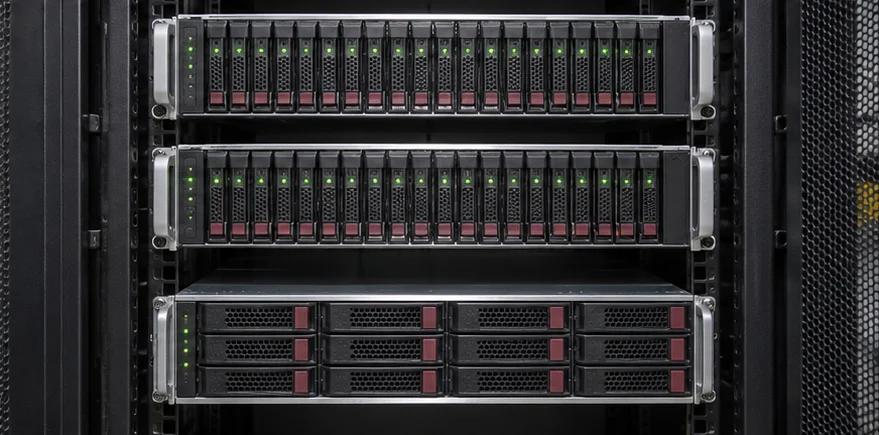
Hospital Server & Equipment Rooms
Organised enterprise network, computing and storage infrastructure with appropriate technical access arrangements.
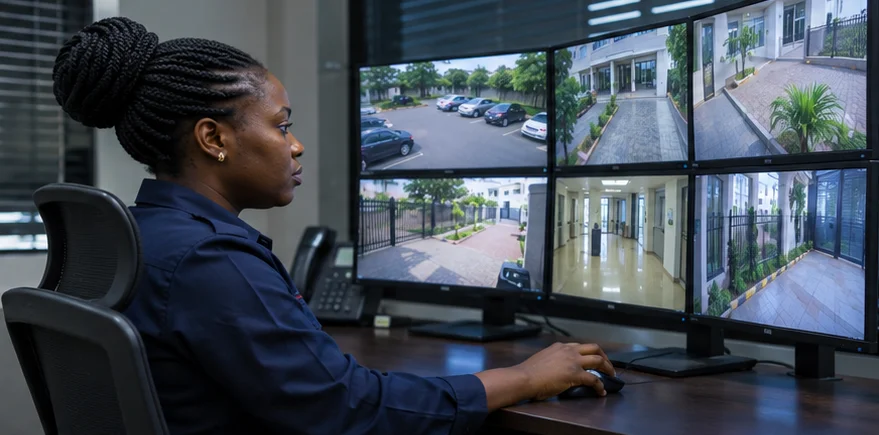
Healthcare Facility Security
Suitable CCTV, entrance systems and controlled access for approved facility monitoring and security requirements.
Your Healthcare Infrastructure Questions, Answered.
A modern hospital may need reliable electricity, network connectivity, computing systems, data storage, appropriate network security and physical security infrastructure.
Clinical equipment and specialised healthcare systems introduce additional engineering, safety and regulatory requirements that must be addressed by qualified specialists.
Integrated Solutions Technology offers healthcare facility networking, structured cabling, servers and storage, commercial solar, CCTV, access control, firewalls and IT support.
Projects are defined according to the facility's specific technical requirements and the agreed service scope.
Yes. Solar photovoltaic systems can be considered for healthcare facilities as part of an appropriately designed electrical power arrangement.
The size and configuration depend on measured demand, site conditions and the loads the system is expected to support.
Some medical loads may be supplied by properly engineered power systems, but critical equipment requires specialised assessment.
Life-support systems, operating theatres, medical refrigeration and other critical applications may require specific redundancy, protection, transfer and power-quality arrangements.
No general solar package should be assumed suitable for these loads without qualified engineering and verification.
Hospital power requirements vary considerably according to equipment, operating hours, building size, clinical services and critical electrical loads.
A qualified assessment should consider load profiles, peak demand, backup duration, available space and relevant electrical safety requirements.
Hybrid arrangements are technically possible with suitable equipment, protection and controls.
The design must address applicable electrical standards, source coordination, critical loads and the facility's continuity requirements.
A correctly sized system may support selected clinic loads such as office computers, lighting and communications.
If the system will supply clinical equipment, refrigeration or other critical services, additional specialist assessment is required.
A hospital may require structured cabling, wired connections, wireless networks, switches, firewalls and other supporting communication infrastructure.
The design should distinguish administrative systems, patient or guest access and medical-device environments where relevant.
Different users and devices may require separate access permissions and security controls.
The suitable architecture depends on the facility's applications, device requirements and cybersecurity policies. Medical devices should only be connected according to appropriate specialist and manufacturer guidance.
Structured cabling work can be considered for appropriate hospital areas.
The installation plan must address occupied spaces, sensitive departments, infection-control requirements, access restrictions and operational disruption.
Suitable enterprise server and storage hardware can be supplied and installed within an agreed infrastructure project.
Healthcare application integration, medical image archiving and clinical records configuration require separate confirmed capabilities and specialist requirements.
Not always.
Some clinics use hosted applications while others require local systems or a hybrid arrangement.
The choice depends on application requirements, connectivity, security, continuity and vendor support.
Patient information should be protected through appropriate organisational and technical controls, such as access restrictions, secure systems, monitoring policies and proper data handling.
Health information is sensitive personal data under Nigeria's data-protection framework. Healthcare organisations should obtain qualified guidance on their applicable legal and technical obligations.
Enterprise firewalls can be considered for suitable healthcare network security requirements.
The configuration must be assessed against the network architecture, clinical-system dependencies, access needs and applicable security obligations.
Segmentation can help establish appropriate boundaries between different users, devices and systems.
Its implementation requires careful consideration of clinical connectivity, supported equipment and the effect of changes on healthcare operations.
CCTV may be appropriate in selected areas for legitimate security purposes, such as certain entrances, external approaches and designated public spaces.
Camera placement requires particular care around patient privacy, treatment areas and confidential activities.
Such installations require heightened scrutiny because they may capture sensitive personal information and intimate patient activities.
Any proposal must be evaluated against legal requirements, necessity, proportionality, patient rights and the facility's clinical policies. General security needs do not automatically justify surveillance in these spaces.
Suitable electronic access systems can restrict entry to designated equipment rooms and other authorised areas.
Access permissions, emergency override requirements, safe evacuation and relevant hospital procedures must be considered.
Physical access solutions may be considered for suitable restricted rooms.
Where areas are subject to specialist clinical, pharmaceutical, laboratory or safety rules, the design must incorporate the appropriate requirements and responsible personnel.
Some activities can be scheduled to minimise disruption, while others may affect existing systems.
Any work involving critical hospital infrastructure requires careful change planning, relevant approvals and appropriate contingency arrangements. Uninterrupted service cannot be guaranteed without a verified plan.
Managed IT Support & Maintenance and Onsite IT Technical Support form part of Integrated Solutions Technology's service portfolio.
The exact systems, service hours, support coverage and escalation requirements must be agreed.
Specialised medical equipment servicing is not automatically included.
Multi-site infrastructure projects can be considered according to the location, technical scope, available resources and site requirements.
Network configuration, documentation, equipment consistency and support responsibilities should be defined for each location.
Medical equipment procurement, clinical engineering and hospital management software development are separate specialisms and should not be assumed to be covered.
The stated offering focuses on supporting solar, network, enterprise IT and electronic security infrastructure unless additional capabilities are verified.
Costs depend on the facility size, number of network connections, selected equipment, server requirements, security coverage, power needs and site conditions.
A structured assessment and bill of quantities help establish the required investment.
Provide the facility location, type of healthcare operation, areas requiring attention and any available infrastructure information.
Existing floor plans, network diagrams, equipment inventories and load data may help clarify the project.
Priorities should follow an assessment of the facility's operational risks, existing systems and critical dependencies.
Often-relevant areas include appropriate power arrangements, network reliability, equipment condition, security controls, documentation and maintenance responsibilities.
A multidisciplinary provider can coordinate appropriate supporting IT and power services when the scope, required competencies and technical responsibilities are clearly defined.
Specialised clinical engineering and critical electrical systems must remain under appropriately qualified professionals.
Contact Integrated Solutions Technology with details of the healthcare facility, existing infrastructure and the improvements you want to make.
We can review the initial requirements and discuss an appropriate assessment and project scope.
Strengthen the Infrastructure Behind Healthcare Operations
Share the site, project or technical requirement and Integrated Solutions Technology can help define the appropriate next step.
Let Your Healthcare Team Focus on Care. Plan the Infrastructure Around It.
Hospitals, clinics and medical facilities depend on supporting systems that must be carefully selected, installed and maintained.
Whether you're developing a new medical facility, improving network infrastructure, evaluating solar power or strengthening physical security, Integrated Solutions Technology can help you assess the requirements and plan appropriate solutions.