
Controlled Entry for Spaces That Demand More Security.
Mantrap door installation and servicing in Nigeria for data centres and restricted areas, including access control integration and functional testing.
Two Doors. One Controlled Entry Process.
A controlled entrance should manage authorised access and allow occupants to leave safely during an emergency.
More Controlled Entry
Manage passage between two interlocked doors according to an approved access sequence.
Stronger Restricted-Area Protection
Add a controlled transition between public or general-access spaces and designated sensitive areas.
Integration With Access Credentials
Use suitable card readers, PIN systems or other approved verification methods with compatible interlock equipment.
Clearer Access Procedures
Support defined entry rules, authorised overrides and appropriate event reporting where the selected system allows.
Every Entry Sequence Needs the Right Controls.
We help organisations assess their requirements and plan appropriate specialist implementation and servicing activities.

Understand the Entry Point Before Designing the System.
Controlled-entry requirements depend on the facility, the people using it and the spaces being protected.
We review the intended location, existing door construction, expected pedestrian flow, access permissions and relevant building conditions.
The assessment also identifies whether the proposed arrangement affects emergency escape routes, accessibility, fire-rated doors or other building-safety requirements that must be resolved before installation.
An Organised Transition Into Restricted Spaces.
Explore the physical infrastructure and control equipment used in specialist interlocking-door installations.
Images illustrate the equipment and work involved.
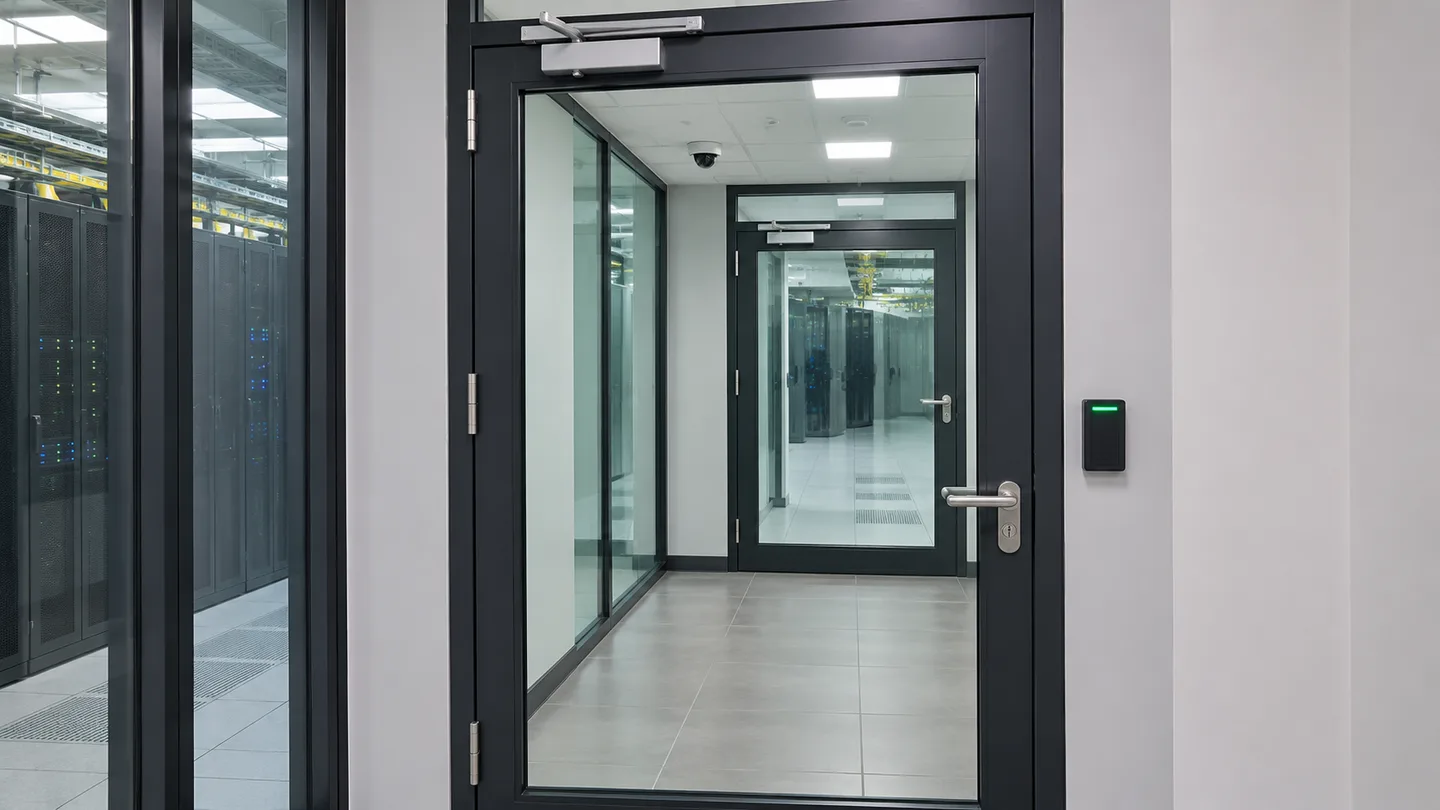
Interlocking Security Door Entrances
Two controlled doors forming a secure vestibule between general-access and restricted areas.
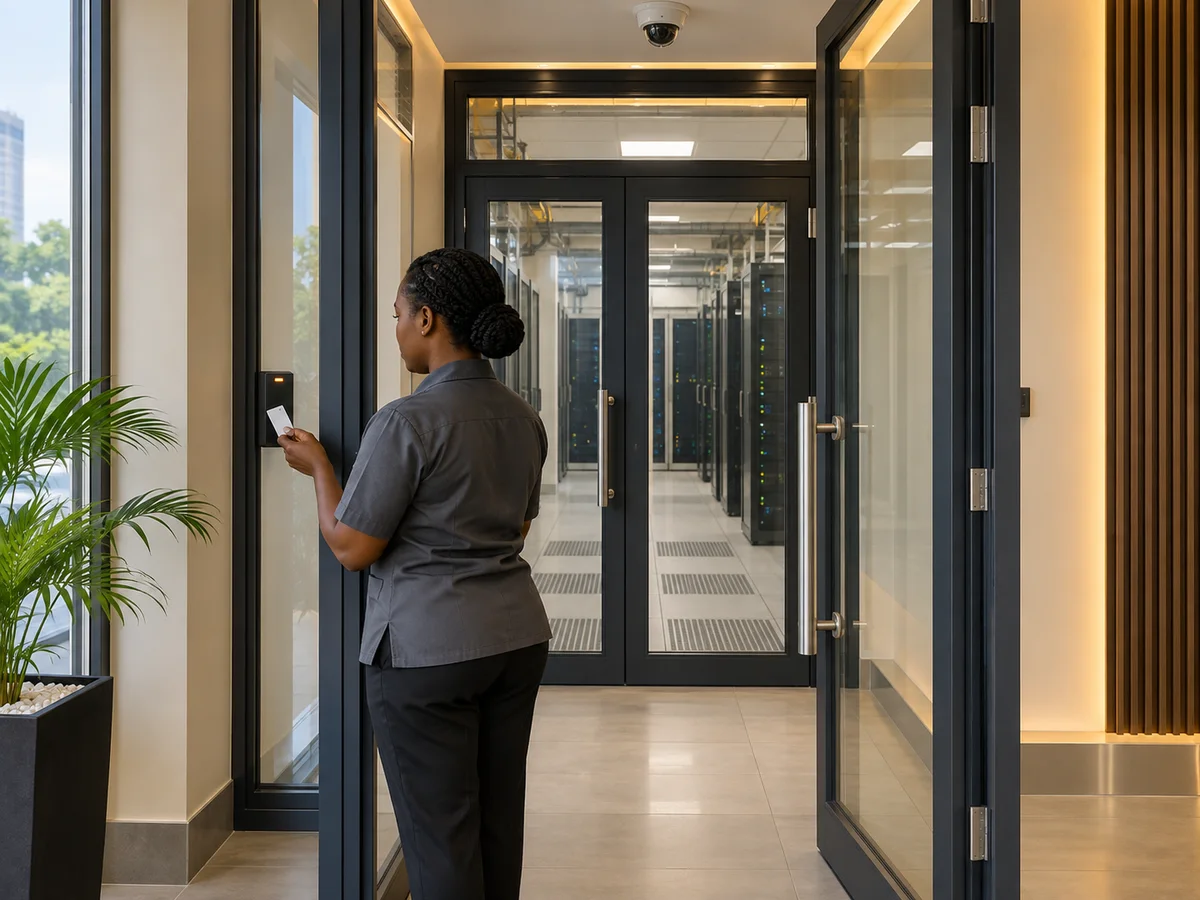
Data Centre & Server Room Entry
Controlled passage arrangements designed around access to sensitive computing and infrastructure spaces.
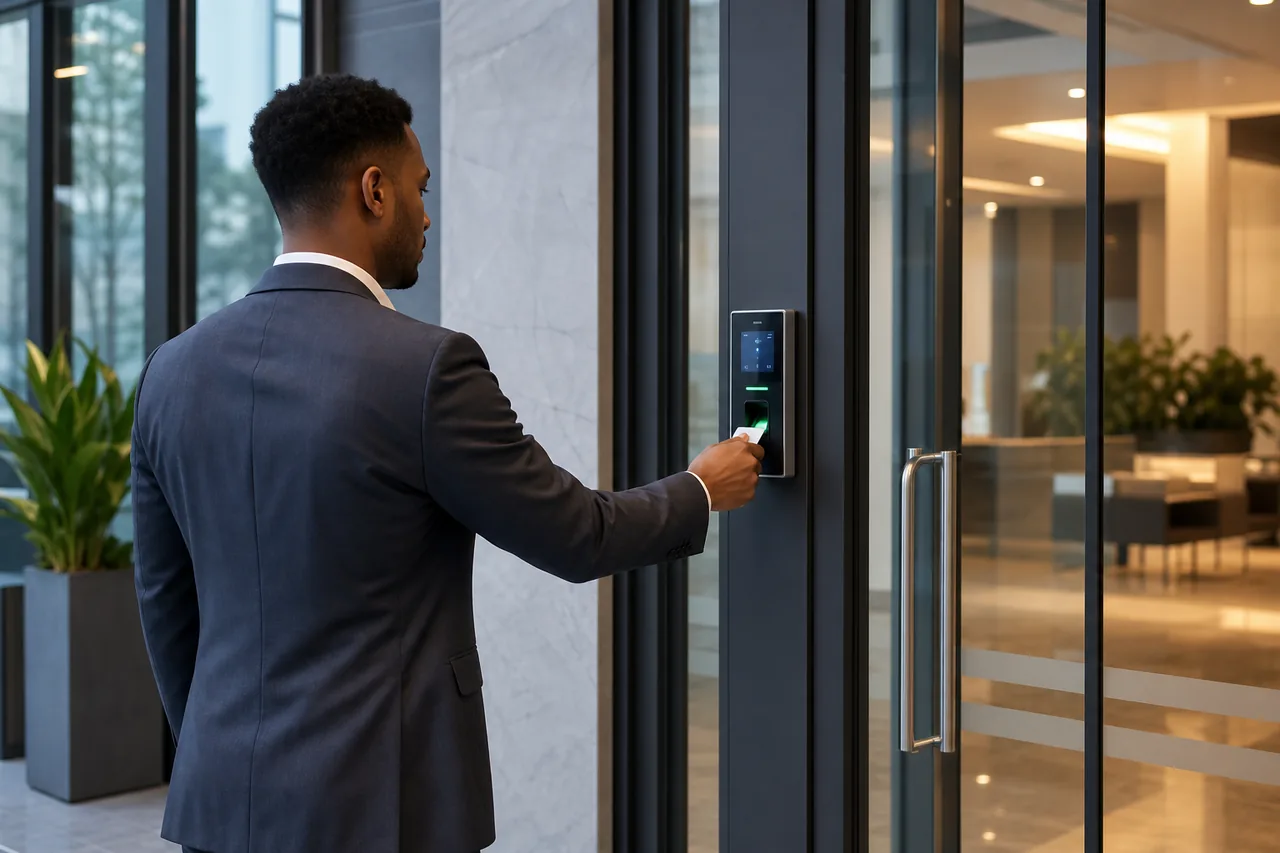
Access Readers & Interlock Controllers
Compatible credential readers, door-status devices and control equipment managing the approved entry sequence.
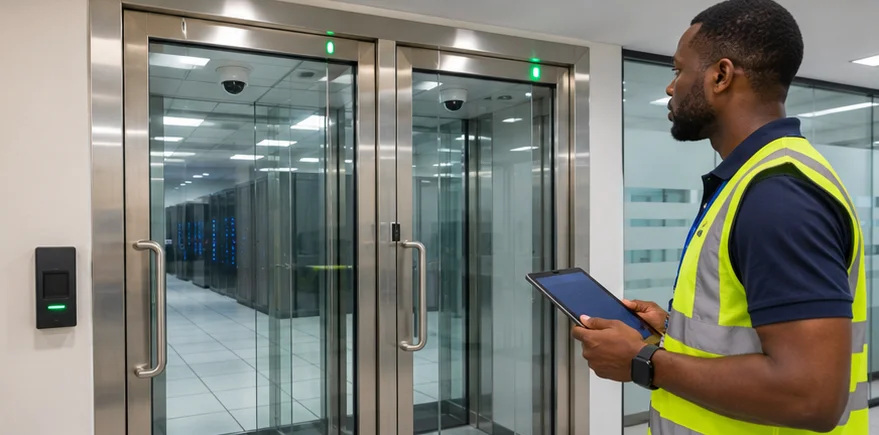
Mantrap Servicing & Functional Verification
Inspection and checking of relevant door hardware, interlock functions, access controls and emergency-release arrangements.
Your Mantrap Door Questions, Answered.
A mantrap door system is a controlled passage, commonly formed by two interlocked doors, used to manage access to a restricted area. Under normal security operation, the control system prevents both doors from being released simultaneously.
An authorised person enters through the first door into an intermediate space. The first door closes and reaches the required secured state before the second door is permitted to open. The exact sequence depends on the equipment, configuration and security policy.
Emergency operation must be designed separately so the interlock does not prevent safe escape.
A conventional access-controlled door determines whether a credential permits entry through one opening. A mantrap also coordinates access through multiple doors, adding a controlled transition before entry into a restricted area.
Mantrap systems may be used at data centres, server rooms, financial facilities, high-security offices and other locations requiring additional control over entry into sensitive spaces.
Their suitability depends on security risk, occupancy, expected traffic and the building's emergency escape arrangements.
Integrated Solutions Technology offers Mantrap Door Installation & Servicing as part of its Security & Surveillance services. The particular equipment, installation responsibilities, specialist expertise and safety requirements must be confirmed for each project.
Pricing depends on the type and condition of the doors, interlock controller, locking devices, credential readers, sensors, power arrangements, construction work and commissioning requirements.
A site assessment and defined system specification are needed before an accurate quotation can be prepared.
It may be possible where the existing doors, frames, spacing, hardware and building layout are suitable.
Conversion requires assessment of fire-door integrity, accessible movement, emergency escape, door-position monitoring and the interlock requirements. Some locations may need new doors or construction changes.
A basic two-door interlock can make unauthorised following more difficult, but it does not guarantee that only one person enters.
Enhanced security portals may use occupancy or presence detection and other measures to identify multiple occupants. The required capability depends on the security assessment.
Yes. Compatible systems may use RFID cards, PIN keypads, biometric readers or other approved credentials.
Biometric authentication also raises sensitive personal data considerations, including lawful processing, access controls and appropriate retention arrangements.
Potentially. Compatibility depends on the installed controllers, communication interfaces, locking hardware and operating requirements.
A technical review should confirm whether existing components can be retained or need replacement.
The response depends on the approved system design and door hardware. Backup power may support certain functions, while suitable emergency-release or mechanical escape arrangements may be required.
The system must never rely on a normal security interlock sequence in a way that prevents required emergency escape.
Where required by the approved fire and escape strategy, the interlock may need to override its normal security operation and release appropriate doors when the fire alarm activates.
This interface requires specialist design, installation and verification under applicable life-safety requirements.
Poor design, inappropriate locking arrangements or equipment faults can create an entrapment risk.
Emergency exit and override provisions must be assessed and verified before use. The ability to exit safely takes priority over maintaining the normal security sequence.
A mantrap should not be installed across an escape route without competent assessment and an approved means-of-escape design.
Any electronic locking or interlock functions must be compatible with the applicable building, accessibility and fire-safety requirements.
Suitable accessible designs may be possible, depending on vestibule dimensions, clear door widths, turning space, operating controls and user movement requirements.
Accessibility must be considered during planning rather than added after the equipment is installed.
Yes, where the facility's security requirements and building design support a controlled entry vestibule.
The arrangement must consider authorised personnel, equipment movement, access events, emergency exits and any relevant fire-alarm interfaces.
An interlock controller coordinates the status and permitted operation of associated doors.
It may receive information from door-position sensors, credential systems and other approved inputs, then control compatible locking devices according to the configured logic and safety requirements.
The interlock may prevent the second door from being released during normal operation.
Possible causes include alignment problems, defective closers, door sensors, locking hardware or controller faults. The system requires competent inspection rather than bypassing protective functions without authorisation.
Existing systems can be assessed for appropriate maintenance or repair, subject to equipment compatibility, available documentation, access permissions and qualified technical resources.
Some faults may require specialist door-hardware or fire-safety expertise.
Maintenance frequency depends on the door hardware, manufacturer instructions, usage, site conditions and the approved safety requirements.
Regular servicing should address relevant mechanical components, sensors, interlock behaviour, controls and emergency functions.
Compatible CCTV cameras may provide additional visibility around controlled entrances where appropriate.
Any integration or monitoring arrangement must respect the organisation's security requirements, privacy obligations and applicable recording policies.
The timeframe depends on the condition of the building and doors, equipment availability, cabling, structural work, access-control integration and specialist commissioning.
A realistic schedule follows the site assessment and approval of the design.
Useful information includes the facility location, proposed entrance, existing door arrangement, floor plans, expected daily users, preferred credential methods, current access-control platform and any fire-safety design documentation.
Contact Integrated Solutions Technology with details of your facility and intended security entrance, or describe the problem with an existing system.
We can review the initial requirements and discuss the assessment, specialist design and technical work needed for a suitable proposal.
Stronger Entry Control Begins With the Right Design.
Whether you're planning a restricted data centre entrance, assessing an existing two-door vestibule or addressing a fault in a mantrap system, Integrated Solutions Technology can help you define the requirements and appropriate next steps.