
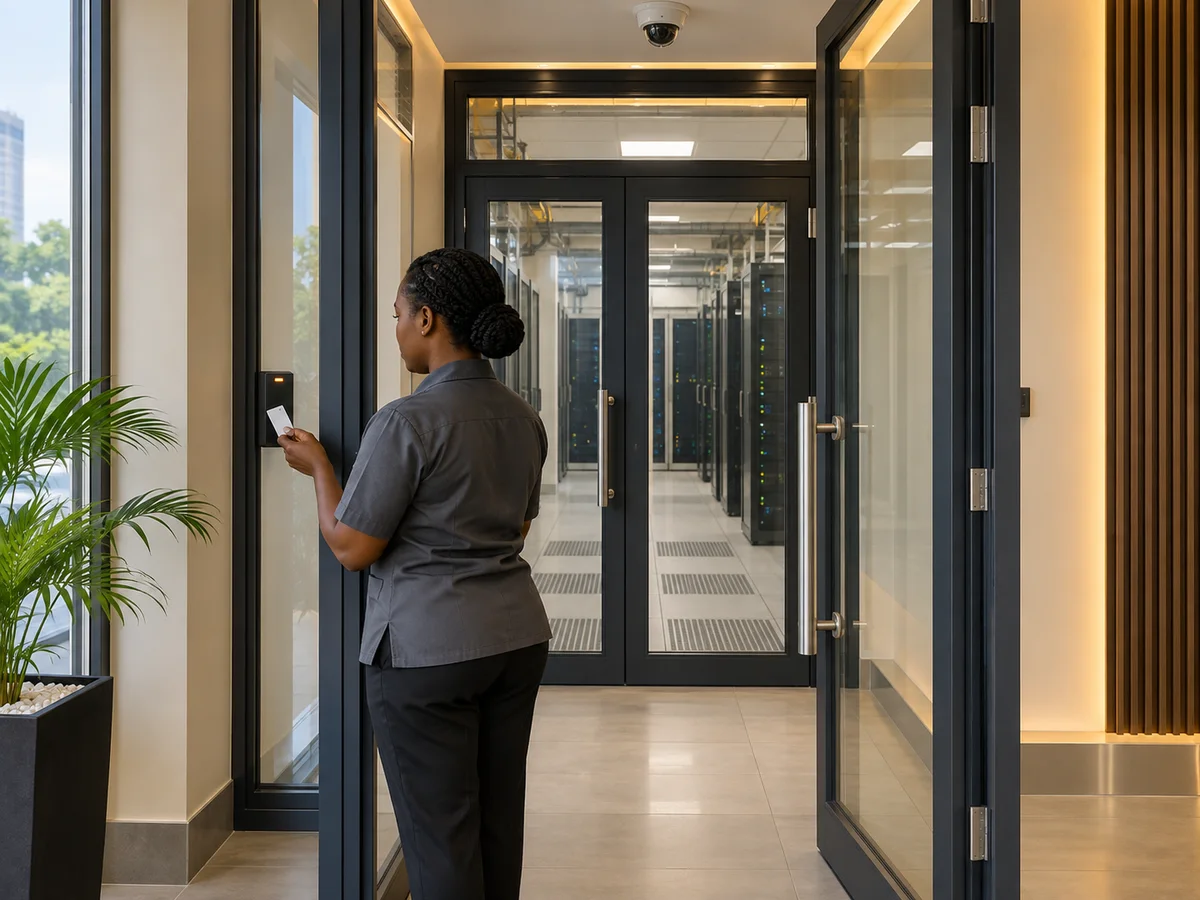
The Right People. The Right Access. At the Right Time.
Door access control in Nigeria for offices and restricted areas, with card, PIN and biometric options, electronic locks and access management.
Better Security Starts With Clear Access Decisions.
The right system balances security, convenience, privacy and safe movement through your building.
Control Access by Area
Restrict entry to designated offices, equipment rooms, stores and other areas according to approved permissions.
Manage User Credentials
Issue, modify or revoke compatible cards, PINs and other supported credentials as personnel and access requirements change.
Improve Access Visibility
Use available system records to review authorised access events, subject to the selected equipment, configuration and data policies.
Support Everyday Operations
Choose access arrangements suited to staff movement, visitor requirements, opening hours and the intended use of each door.
Every Door Has a Purpose. Every Access Decision Needs a Plan.
We help organisations identify their controlled-entry requirements, select suitable equipment and plan installations with attention to security, operational convenience and emergency escape.
Understand Who Needs Access and Where.
Different areas of a building may require different levels of access.
We review designated entry points, door types, user groups, operating hours, existing security arrangements and relevant site conditions.
The assessment helps identify suitable reader locations, credential options, controller requirements, locking arrangements and any life-safety or integration considerations that need specialist review.
Security Technology That Works With Your Building.
Explore the equipment and installation arrangements involved in managing controlled entry across different facilities.
Images illustrate the equipment and work involved.
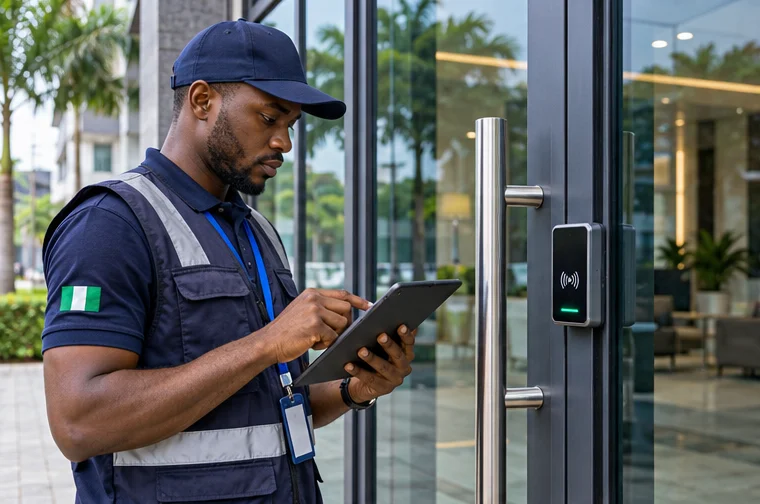
Office Door Access Control
Electronic access readers and compatible locking hardware installed on designated staff entrances and restricted office areas.
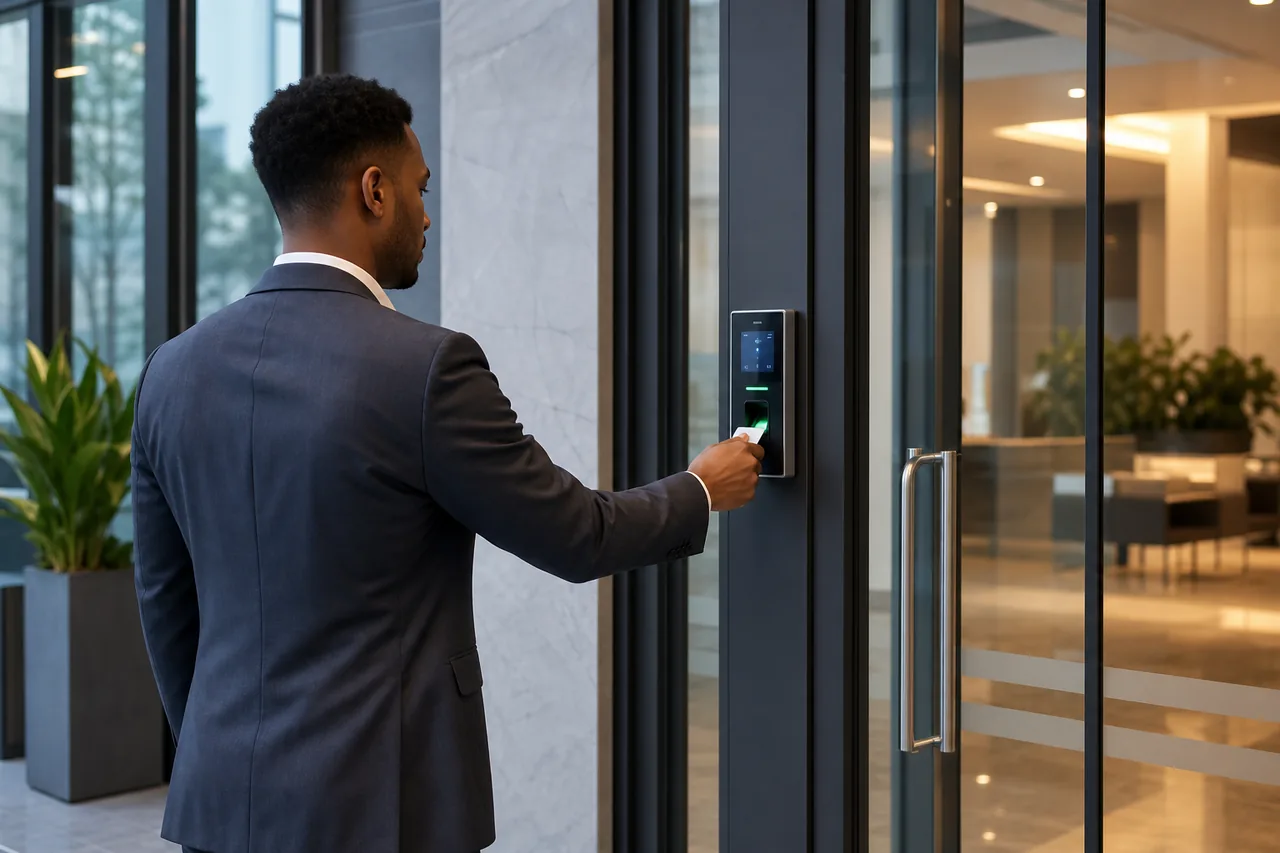
Card Readers & Biometric Terminals
Suitable credential readers mounted at approved locations to support authorised identification and access decisions.
Server Room & Restricted-Area Security
Controlled entry arrangements designed to limit access to selected technical and business-critical spaces.
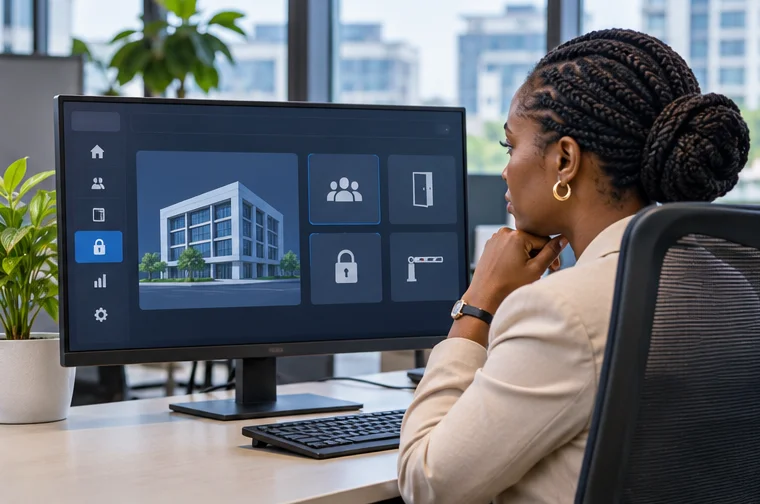
Access Controllers & Management Systems
Compatible control equipment and management interfaces configured to administer users, door permissions and supported access-event records.
Your Access Control Questions, Answered.
An access control system manages permission to enter designated buildings, rooms or restricted areas. Electronic systems commonly use credentials such as cards, PINs or biometric identifiers, along with readers, controllers and compatible locking hardware.
The cost depends on the number of doors, credential technology, selected hardware, door construction, cabling, power requirements, software features and installation conditions. A site assessment helps determine the equipment and installation scope before an itemised quotation is prepared.
Integrated Solutions Technology provides electronic access control solutions for business and property environments. Projects can include site assessment, equipment selection, installation, configuration and agreed handover activities.
Biometric access terminals can be considered where suitable equipment and a lawful, appropriate use case have been established. Organisations must also consider how biometric data will be collected, protected, retained and deleted under applicable privacy requirements.
Biometric systems use a person's physical or behavioural characteristics for identification or authentication. RFID or smart-card systems use compatible credentials presented to a reader. The right option depends on the security objective, user needs, privacy requirements and system capabilities.
Yes. Compatible systems can be configured so designated users or groups have access only to approved doors or areas. Permission settings depend on the controller, software and system design.
Many access control platforms support time-based schedules and user groups. For example, employees may be assigned access during approved working hours while designated personnel receive broader permissions.
Often, yes. The existing door, frame, lock, opening direction, available space and emergency escape requirements must be assessed before selecting electronic hardware. Some doors may require specialist modifications or a different access-control approach.
An electromagnetic, or magnetic, lock uses electrical power to hold a compatible door closed. Its suitability depends on the door design and security requirements. Emergency release arrangements, power-loss behaviour and applicable fire-safety requirements must be considered carefully.
A fail-safe electronic locking function releases when its power is removed. A fail-secure locking function remains locked when power is removed.
These descriptions do not, by themselves, determine whether occupants can exit safely. The complete door hardware and emergency escape design must be assessed for the intended use.
Behaviour depends on the locking hardware, power-supply design and any backup power arrangements. Some devices unlock when power is lost, while others retain their locked state but provide independent mechanical escape. The correct arrangement must be determined for each door and its safety requirements.
Many systems can make local access decisions without a continuous internet connection, depending on their architecture and configuration. Cloud management, remote administration or certain reporting features may require network connectivity.
Compatible systems can record access events linked to assigned credentials or users. Record availability and accuracy depend on the system configuration, credential practices and retention settings. Access logs must be managed according to applicable privacy and security obligations.
Certain platforms support integration with compatible CCTV or video management systems. This may allow authorised personnel to associate selected door events with video records. Integration requires confirmation of product compatibility and the agreed technical scope.
Where required by the building's approved fire and escape strategy, suitable access control devices may need to interface with the fire alarm system. The design and verification must meet applicable local requirements and should involve appropriately qualified fire-safety professionals.
Yes. Server rooms and other technical spaces are common candidates for controlled entry. The selected arrangement should reflect authorised personnel, access logging needs, existing door hardware and emergency escape requirements.
Yes. Compatible multi-door controllers and management platforms can administer multiple controlled entry points. The number of supported doors depends on the system architecture, licensing, available connections and equipment capacity.
Suitable systems may support temporary credentials, scheduled permissions or integration with visitor-management procedures. Available options depend on the selected products and the organisation's access policies.
Biometric data used to uniquely identify a person is sensitive personal data under the Nigeria Data Protection Act 2023. Organisations must establish a lawful basis, meet the conditions for processing sensitive data and protect people's rights. Under the Nigeria Data Protection Commission's 2025 directive, organisations must conduct and file a data protection impact assessment when sensitive personal data is involved.
No. Access control can strengthen entry management, but it cannot eliminate every security risk. Security also depends on door construction, credential protection, system maintenance, operating procedures and the wider physical security arrangements.
An existing system can be assessed for additional doors, replacement readers, updated controllers or changes to management functionality. Upgrade feasibility depends on the installed platform, wiring, compatibility and manufacturer support.
Integrated Solutions Technology also offers Security System Maintenance & Upgrades. The specific maintenance activities and support arrangements for access control equipment can be discussed separately.
The timeframe depends on door quantities, door construction, equipment availability, cabling pathways, electrical requirements and integration complexity. A defined project scope helps establish an appropriate schedule.
Useful details include your property location, number and type of doors, approximate user count, preferred credential method, existing security infrastructure and any visitor-management or integration requirements.
Contact Integrated Solutions Technology with your facility location and the entry points you want to manage. We can discuss your operational and security requirements and recommend the next steps towards a suitable access control proposal.
Know Who Should Enter. Make Access Easier to Manage.
Whether you're securing an office entrance, controlling access to a server room or planning an electronic entry system across multiple doors, Integrated Solutions Technology can help you assess your requirements and develop a suitable access control solution.