
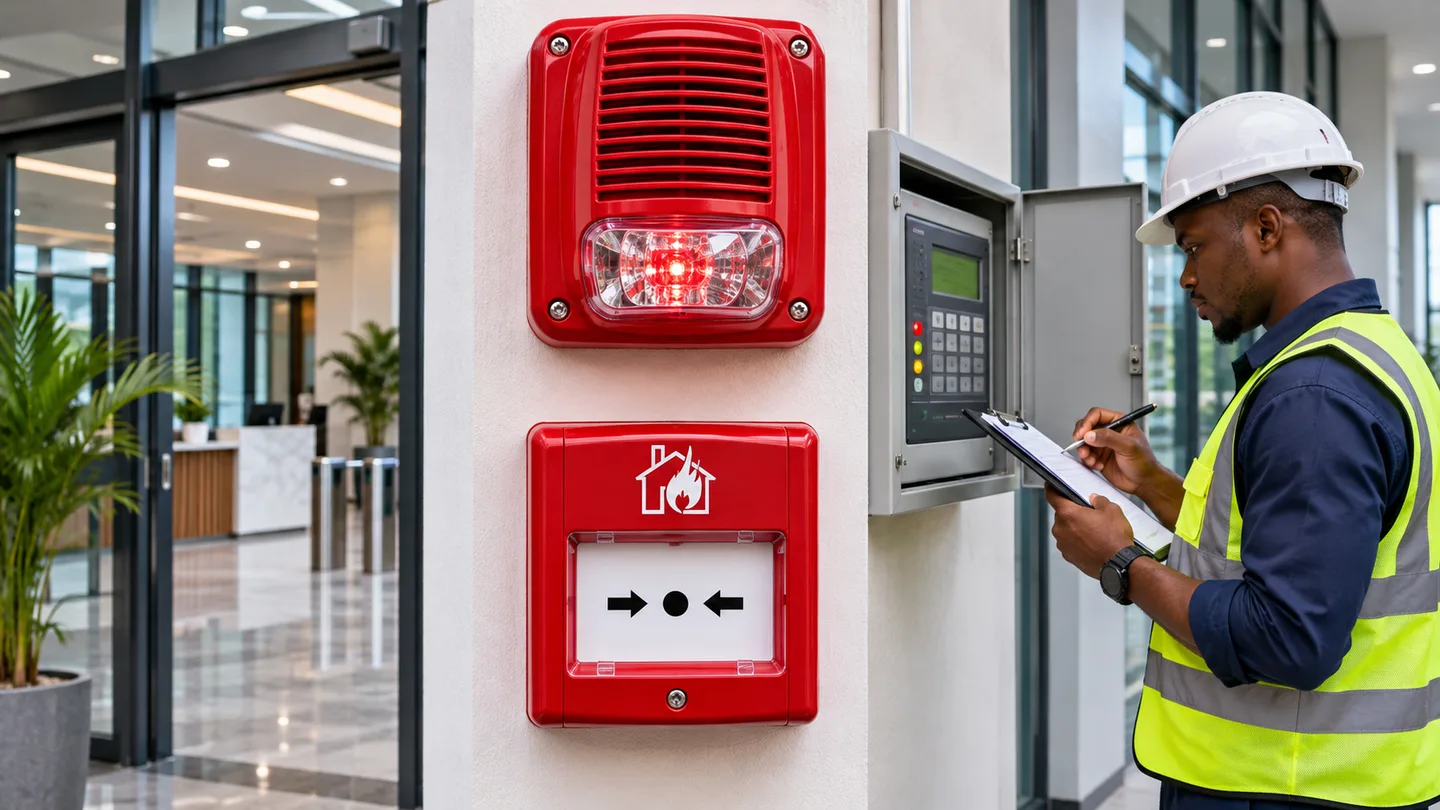
Early Warning Matters. Every Second Counts.
Fire alarm systems in Nigeria, including smoke and heat detection, control panels, alarm installation, testing and commissioning.
Fire Safety Requires More Than an Alarm on the Wall.
Equipment selection, detector locations, notification coverage and emergency interfaces all need careful consideration.
Earlier Fire Detection
Use appropriate detection devices in locations determined by the building's fire risk assessment and approved fire alarm design.
Effective Occupant Warning
Provide suitable audible and, where required, visual notifications that support the intended evacuation strategy.
Clearer System Monitoring
Use appropriate alarm control and indication equipment to identify relevant fire, fault and supervisory conditions.
Better Safety Preparedness
Support ongoing inspection, testing and maintenance through accessible equipment, documentation and defined operational responsibilities.
Every Detector, Alarm and Connection Has a Safety Purpose.
We help organisations assess technical requirements and coordinate appropriately qualified design, installation and commissioning work according to the agreed project and applicable safety requirements.

Establish the Requirements Before Selecting Devices.
A fire detection and alarm system should be based on the premises, occupancy, risk assessment and applicable regulatory requirements.
We review the building layout, intended use, existing fire safety infrastructure and the project documentation available.
This helps identify the design information, equipment requirements, interfaces and specialist fire-safety approvals that must be addressed before implementation.
The Systems Behind an Effective Fire Warning.
Explore the equipment and technical activities involved in building fire detection and alarm infrastructure.
Images illustrate the equipment and work involved.
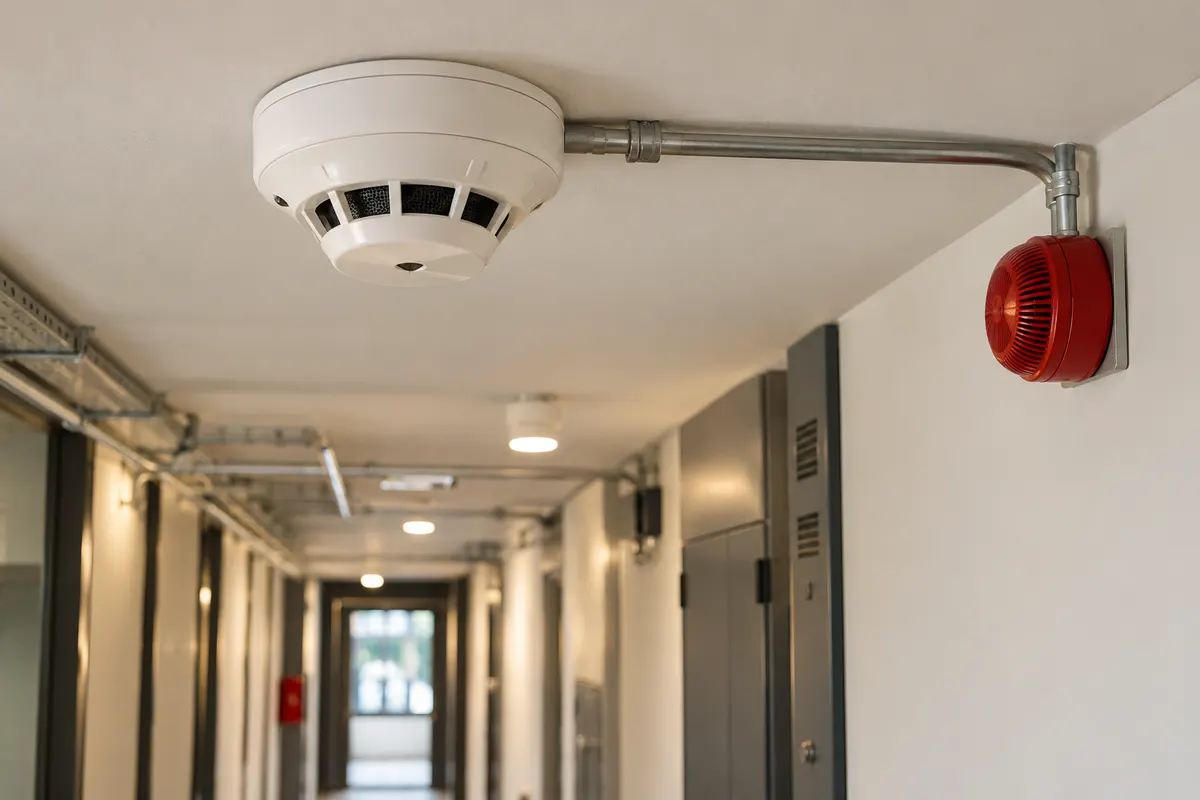
Smoke & Heat Detection Devices
Appropriate detectors selected and positioned according to the building's risk profile and approved design.
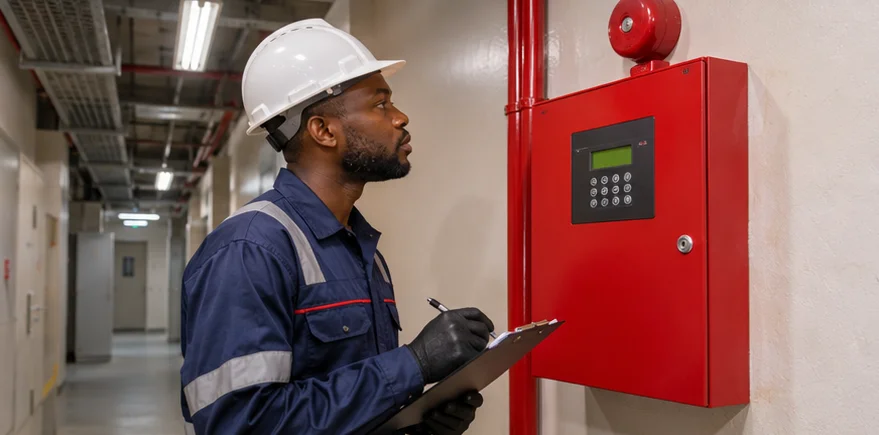
Fire Alarm Control Panels
Compatible conventional or addressable control equipment used to receive, indicate and manage relevant alarm and fault signals.

Manual Call Points & Alarm Notification
Suitable manual activation devices, audible alarm sounders and visual notification equipment installed at approved locations.
Fire Alarm Inspection & Commissioning
Competent personnel checking equipment operation, system indications, notification functions and relevant safety interfaces against the approved requirements.
Your Fire Alarm System Questions, Answered.
A fire alarm system is an arrangement of compatible equipment designed to detect or receive an indication of fire and provide appropriate warning or signalling. It may include detectors, manual call points, control panels, notification devices, power supplies and related interfaces.
Integrated Solutions Technology lists Fire Alarm & Safety Systems within its Security & Surveillance services. The precise design, installation, specialist subcontracting, commissioning and approval responsibilities must be established for each project before work is agreed.
The cost depends on building size and use, required detection coverage, system category, number of devices, control-panel specification, cabling, interfaces, standby power and commissioning requirements. An approved design or suitably qualified assessment is needed to prepare an appropriate quotation.
A conventional system generally identifies an alarm through the circuit or zone associated with the activated device.
An addressable system can provide information about individual compatible devices through a suitable control panel. The preferred architecture depends on the building's needs, approved design and system specification.
Smoke detectors respond to specified smoke characteristics, while heat detectors respond to temperature conditions according to their operating principle. Each has particular applications and limitations. The correct device must be selected according to the environment and applicable design requirements.
There is no reliable universal number based only on floor area. Detector requirements depend on the building's layout, occupancy, fire risk assessment, ceiling conditions, applicable standards and the approved system design.
A manual call point allows a person to activate a fire alarm system when they discover a fire or another condition requiring alarm activation under the site's procedures. Its location and installation must follow the relevant design and safety requirements.
The required alarm notification arrangements depend on the building, occupancy and evacuation strategy. Audible signals are common, while visual notification devices or other arrangements may be necessary for particular environments and accessibility needs.
Properly specified fire alarm systems include standby power arrangements suited to the applicable standards and design requirements. Actual standby performance depends on the power supply, battery condition and system load.
Where required, fire alarm systems may interface with appropriate access-control equipment to support safe emergency escape. The release behaviour and interface must follow the approved fire and life-safety design and be verified by competent personnel.
Some compatible systems support monitoring or integration through approved interfaces. Integration must not compromise required fire alarm functions, fault supervision, independence or the system's applicable approvals.
No. A fire detection and alarm system primarily provides detection, indication and warning functions. Fire suppression systems perform a different role. Any connection between them requires appropriate specialist design and verification.
Commissioning is the structured process of checking that the installed system operates as specified. It includes relevant device tests, system indications, notification functions, power arrangements and interfaces, with appropriate records produced for acceptance and handover.
Testing and maintenance intervals depend on the applicable standards, approved design, local requirements, equipment instructions and building responsibilities. The owner or responsible person should establish and follow an appropriate documented inspection and maintenance programme.
Existing systems can be assessed for modification, extension or replacement. Any proposed change must consider compatibility, system capacity, continued protection, applicable standards and the potential effects on the building's fire safety strategy.
A fault indication can relate to devices, wiring, power supplies, communications or other monitored conditions. It should be investigated promptly through competent maintenance procedures. Silencing a fault indication does not mean the underlying problem has been resolved.
Requirements vary according to the building's use, occupancy, size, location and applicable regulatory approvals. Nigerian building regulations and relevant state fire-safety authorities may require particular detection and alarm provisions. The property owner should confirm the requirements with qualified fire-safety professionals and the appropriate authority.
Project teams may use BS 5839-1:2025 or NFPA 72 as technical references. A qualified fire safety professional should confirm which standards, editions and Nigerian regulatory requirements apply to the project.
Any required certification, inspection or statutory approval must be provided or issued by an appropriately authorised and competent party. The documentation and authority responsibilities should be confirmed before the project begins. Equipment installation alone does not establish regulatory compliance.
Fire detection and alarm arrangements can be developed for these environments, but device selection must consider the actual risks, operating conditions and building design. High ceilings, dust, heat or specialised processes may require particular detection approaches.
Yes. Fire alarm systems require inspection, testing and maintenance according to the applicable safety requirements and manufacturer instructions. An appropriate maintenance plan should form part of operational handover.
The timeframe depends on design approval, building complexity, equipment availability, cabling, number of devices, interfaces, site access, commissioning and any required authority inspections. A reliable schedule follows confirmation of the approved scope.
Useful details include the property location, building use, number of floors, floor plans, occupancy, existing fire safety design or risk assessment, required approvals and whether an existing alarm system is installed.
Contact Integrated Solutions Technology with information about your building and the fire alarm requirements. We can review the initial details and identify the specialist assessment, design and implementation arrangements needed for the project.
Fire Safety Deserves the Right Design and the Right Expertise.
Whether you're developing a new commercial building, reviewing an existing alarm installation or planning a system upgrade, Integrated Solutions Technology can help you discuss the technical requirements and appropriate next steps with qualified fire-safety specialists.