
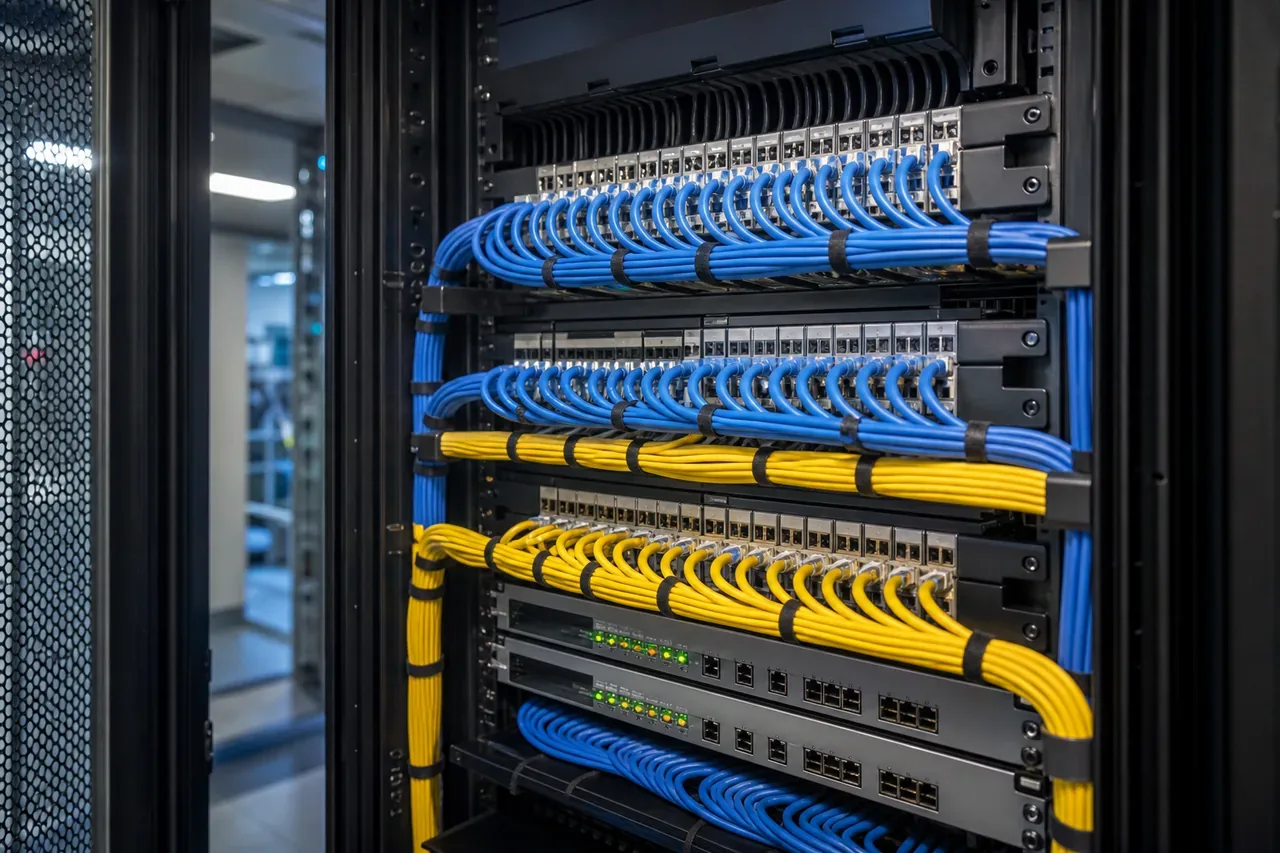
Know Every Cable. Trace Every Connection. Stay in Control.
Cable labelling and switch port mapping in Nigeria, including cable tracing, patch-panel identification and records for easier troubleshooting.
Stop Guessing Which Cable Goes Where.
Clear cable labels and accurate port records help your team understand the physical connections behind everyday operations.
Faster Fault Identification
Trace relevant network connections more efficiently when investigating disconnected devices, faulty links or unexpected service interruptions.
Easier Equipment Changes
Identify the correct cables and ports before moving, replacing or reconnecting network equipment.
Better Infrastructure Organisation
Keep network cabinets, patch panels, data outlets and connected devices clearly identified.
More Useful Network Records
Maintain documented connection information that supports ongoing troubleshooting, maintenance and future expansion.
Every Cable Has Two Ends. Both Should Be Easy to Identify.
We help organisations establish a clearer picture of their physical network connectivity.
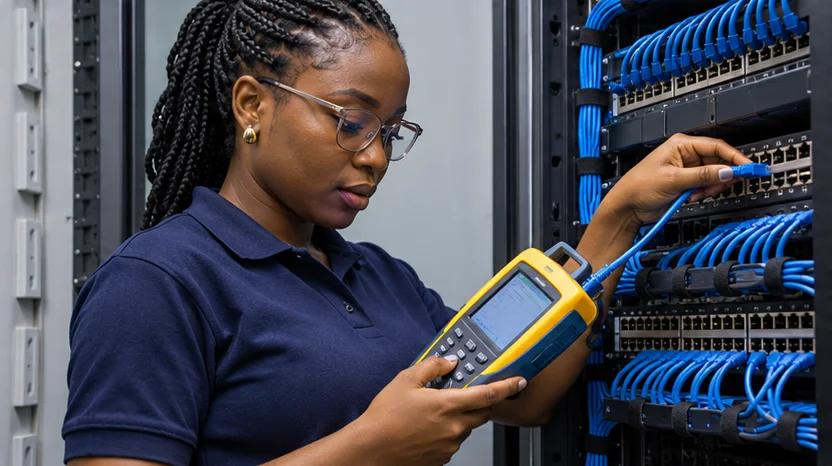
Find Out Where Your Connections Actually Lead.
An unlabelled cable can make troubleshooting and equipment changes unnecessarily difficult.
We review the physical network environment and use appropriate identification and tracing methods to determine relevant cable endpoints.
Depending on the installation and authorised testing scope, this may involve cable identifiers, tracing equipment, patch panel inspection or other suitable verification methods.
Organised Connections. Information Your Team Can Use.
Explore the identification, mapping and documentation activities involved in maintaining a traceable network infrastructure.
Images illustrate the equipment and work involved.
Network Cable Identification
Durable identification labels applied to appropriate cable endpoints according to the agreed network naming convention.
Patch Panel & Outlet Labelling
Clearly identified patch panel connections and network data outlets to help establish the relationship between devices and physical network points.
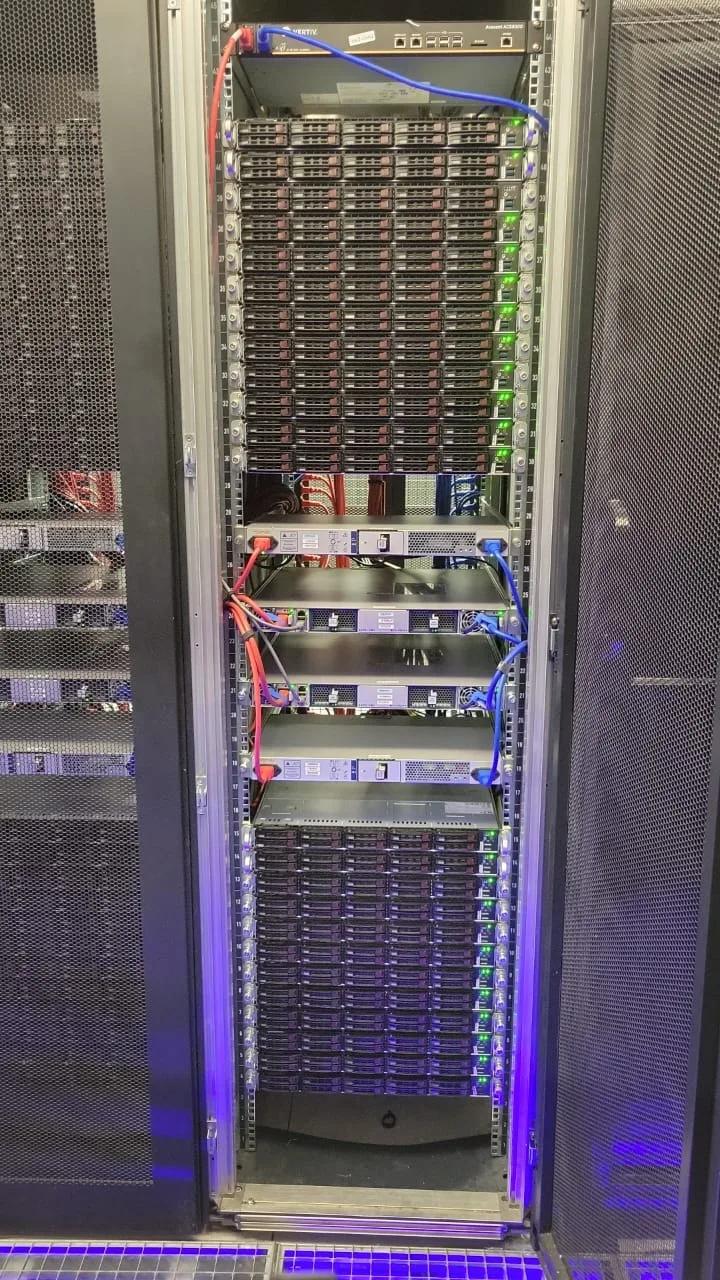
Switch Port Mapping
Physical connection information recorded to help identify the cables and destinations associated with relevant network switch ports.

Network Connection Documentation
Organised records showing relevant equipment, cable identifiers, connection points and verified endpoint relationships.
Your Cable Labelling & Port Mapping Questions, Answered.
Network cable labelling is the process of assigning clear identifiers to network cables and relevant connection points. It helps technicians understand where cables originate, where they terminate and how they relate to other network infrastructure.
Network port mapping identifies and documents the connections between network interfaces, patch panels, outlets and connected devices. It can involve physical tracing, equipment records and authorised network discovery methods.
Server rooms and data centres often contain numerous power and data connections. Consistent identification helps technicians locate cables, investigate faults, plan equipment changes and reduce the risk of disturbing an incorrect connection.
Integrated Solutions Technology provides cable labelling and port mapping as part of its network infrastructure services. Projects may include physical cable identification, patch panel labelling, connection tracing and agreed documentation.
In many cases, yes. Unlabelled cables can be assessed using suitable tracing and verification methods. The ability to confirm each connection depends on site access, equipment conditions, cable type and the permitted testing procedures.
Yes, where the cable and its endpoints can be accessed and appropriately tested. The tracing method depends on the installation type and whether the connection is connected to active equipment.
Where suitable access, equipment capabilities and testing methods are available, switch-port identification can be carried out. This may involve physical connection tracing or authorised network discovery information.
Cable labelling assigns identifiers to cables and related infrastructure. Port mapping documents the relationships between connection points, such as a wall outlet, patch panel port and switch interface. Both work together to make network connections easier to trace.
A consistent identification system should allow each end of a cable to be associated with the same connection record. Labelling both accessible ends is common practice for managing structured cabling.
Some identification and documentation work may be completed without interrupting active connections. However, procedures requiring cable disconnection, intrusive testing or equipment changes may need authorisation and an agreed maintenance window.
Yes. Where the installed cabling is accessible and suitable for tracing, cable identification and documentation can often be completed without full cable replacement. Any damaged or unsuitable cables should be assessed separately.
A cable labelling standard establishes consistent ways to identify telecommunications infrastructure. ANSI/TIA-606-D is an established reference for telecommunications infrastructure administration, including identifiers, records and permanent labels.
An existing naming convention can be reviewed and used where it is appropriate for the project. If the current system is inconsistent, improvements can be discussed before labels are produced.
Patch panel mapping can be included in the agreed scope. It typically involves associating patch panel positions with the corresponding cable endpoints, outlet locations or connected equipment.
Yes. Relevant connection relationships can be recorded where the connections can be identified and verified. The resulting documentation may include switch identifiers, interface numbers, patch panel references and cable identifiers.
Cable tracing identifies where a cable runs or terminates. Cable testing evaluates specified physical or electrical characteristics, depending on the testing method. Identifying a cable does not automatically prove that it meets a particular performance standard.
Yes. Accurate mapping helps technicians identify relevant connection paths more quickly. It can make troubleshooting more efficient, although it does not by itself establish the cause of a network fault.
Large or complex installations can be assessed for a phased identification and documentation project. The approach depends on cabinet quantities, connection density, available access, existing records and operational restrictions.
Yes. Cable identification and port mapping can complement cable routing and rack remediation work. The combined project may involve reorganising suitable cables, improving identification and updating connection records.
The cost depends on cable quantities, rack and patch panel numbers, existing documentation, connection accessibility, tracing complexity and reporting requirements. A defined scope helps establish an appropriate quotation.
The timeframe depends on the size and condition of the network, number of cables and ports, site access and how much tracing is required. Existing documentation can simplify the process when it is accurate.
Agreed deliverables may include a cable identification schedule, patch panel records, switch-port mapping, outlet references and a list of unresolved or unverified connections.
The connection should be recorded as unresolved rather than assigned an assumed destination. Additional access, testing or coordination with the customer's technical team may be necessary.
Useful information includes the site location, number of racks or cabinets, approximate cable and port quantities, existing diagrams, operational restrictions and the documentation format required.
Contact Integrated Solutions Technology with details of your network location, the areas requiring identification and the challenges your IT team is experiencing. We can discuss the scope and next steps towards a suitable infrastructure assessment.
Your Network Shouldn't Be a Mystery to the People Managing It.
Whether you're dealing with unlabelled cables, confusing patch panel connections or incomplete network documentation, Integrated Solutions Technology can help bring greater visibility and organisation to your physical network infrastructure.