
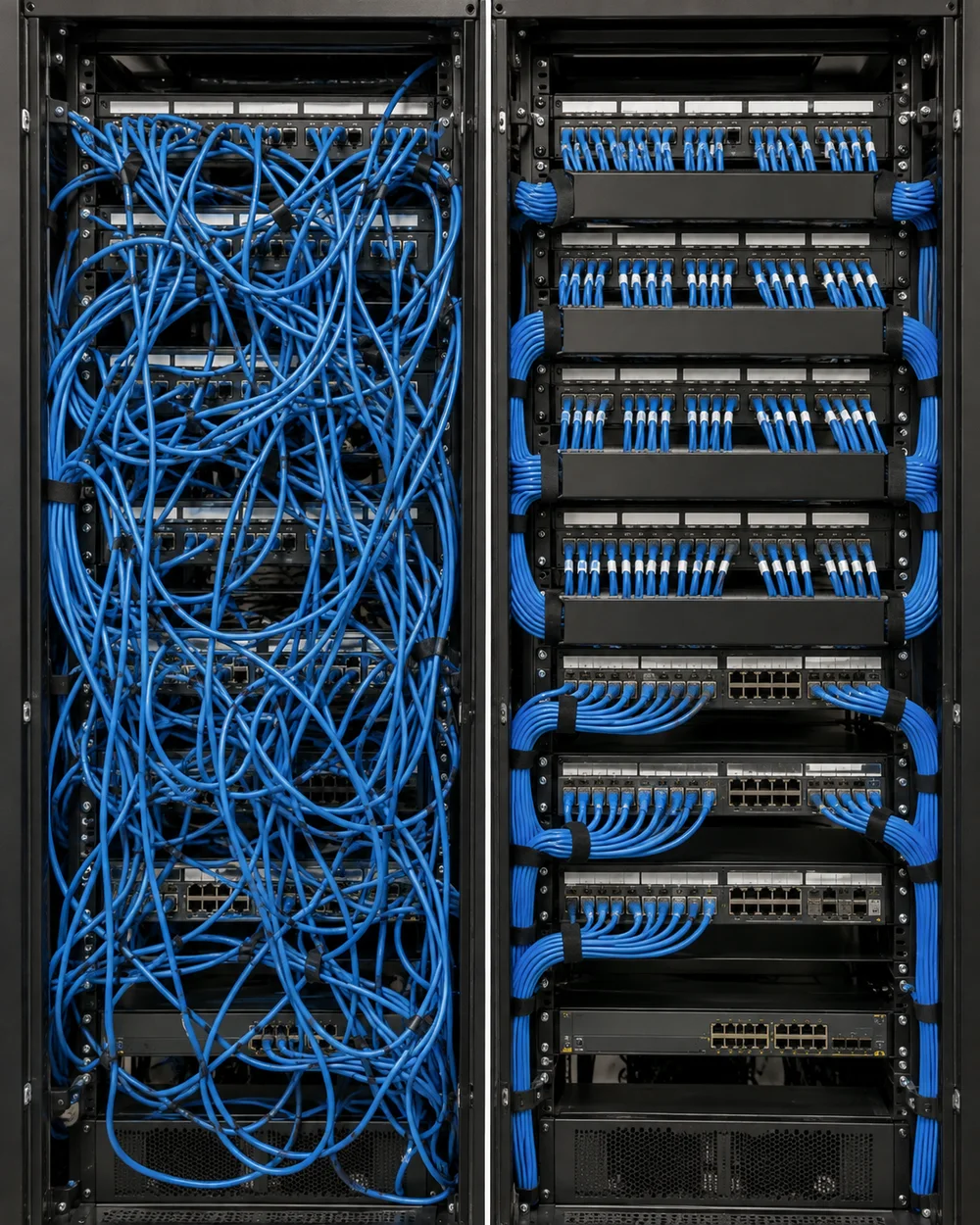
Untangle Your Infrastructure. Restore Order to Your Network.
Cable routing and rack remediation in Nigeria to organise patch cords, improve access and document connections in existing network cabinets.
Your Network Cabinet Should Make Maintenance Easier. Not Harder.
Proper cable routing and rack remediation help create a more organised, accessible and maintainable infrastructure environment.
Easier Equipment Maintenance
Keep relevant equipment, ports and connections accessible so technicians can perform inspections and approved changes more efficiently.
Reduced Risk of Cable Damage
Use suitable routing, support and bend management to help protect cable connections from excessive tension, crushing and sharp bends.
Better Rack Organisation
Reduce unnecessary cable congestion and improve the physical arrangement of network equipment, patch panels and supporting accessories.
More Room for Future Changes
Make it easier to identify available rack space, manage additional connections and plan future equipment upgrades.
Understand the Existing Connections. Improve the Arrangement.
We help organisations assess existing rack conditions and plan appropriate improvements to the physical infrastructure.

Find the Problems Before Rearranging the Cables.
Every rack remediation project begins with understanding the existing installation.
We review equipment positions, cable congestion, accessible connections, cable-management accessories and relevant physical constraints.
This helps identify poorly routed cables, unsuitable arrangements, restricted maintenance access and the improvements needed to make the environment easier to manage.
Better Organisation. Clearer Connections. Easier Maintenance.
Explore the cable-management and infrastructure improvement activities involved in restoring order to existing network environments.
Images illustrate the equipment and work involved.
Network Rack Cable Reorganisation
Improving cable arrangements around existing switches, patch panels, servers and other compatible equipment to reduce unnecessary congestion.
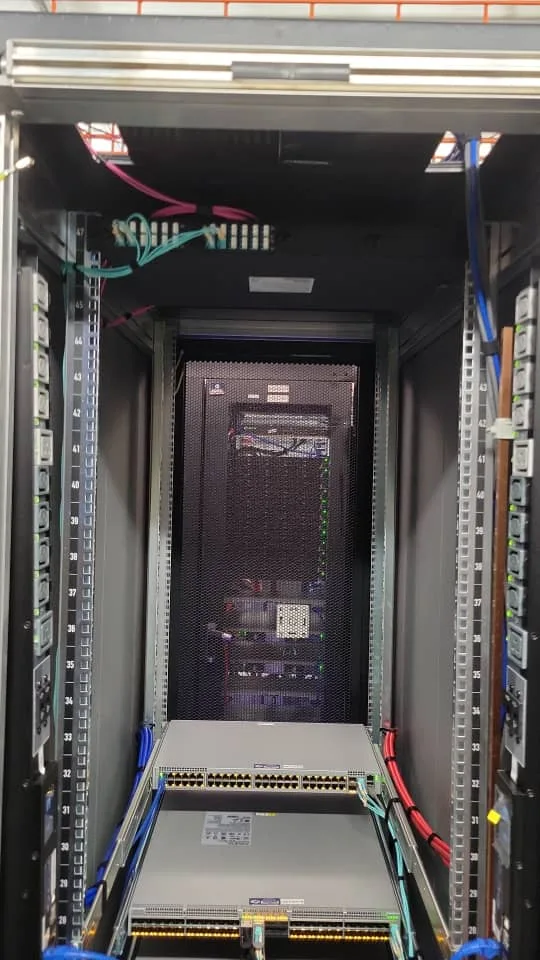
Horizontal & Vertical Cable Management
Using suitable cable managers, pathways and accessories to organise network connections within cabinets and rack environments.
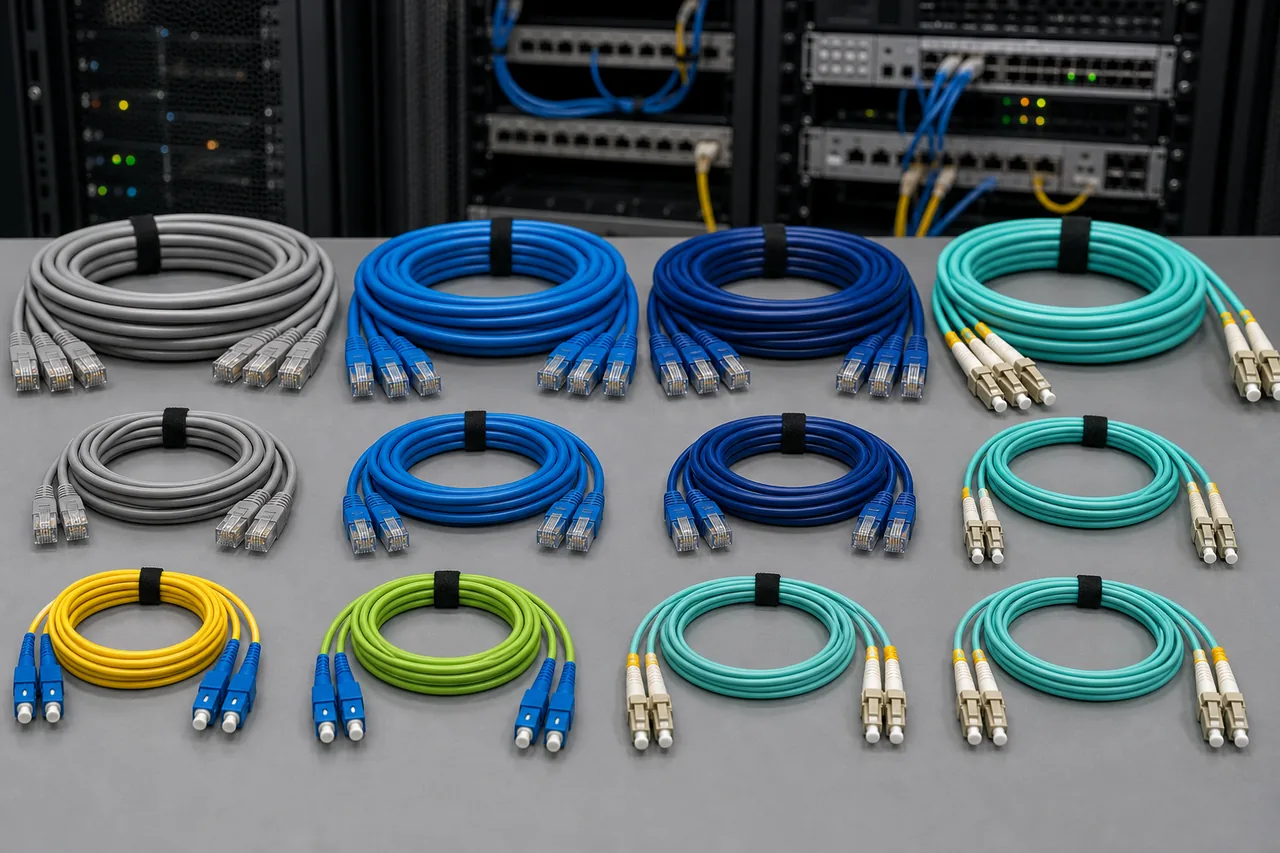
Patch Cord Routing & Replacement
Reviewing excessive patch-cord lengths, unsuitable cable arrangements and connection routing to identify appropriate corrective work.
Rack Inspection & Documentation
Reviewing the completed rack arrangement and recording agreed changes, relevant connection details and any remaining issues.
Your Rack Remediation Questions, Answered.
Network rack remediation is the process of assessing and improving the physical organisation of an existing network rack or cabinet. It may involve cable rerouting, patch-cord replacement, cable-management accessories, equipment rearrangement and related identification or documentation work.
Cable routing focuses on the paths used to organise and protect cables. Rack remediation is a broader improvement process that may include cable routing, rack organisation, accessory installation, equipment repositioning and correction of existing physical infrastructure problems.
Integrated Solutions Technology provides cable routing and rack remediation as part of its network infrastructure services. The work is planned according to the existing installation, site conditions, operational requirements and agreed project scope.
In many cases, yes. Existing cables may be reused when their condition, lengths and specifications are suitable. Damaged, incorrectly installed or unsuitable cables may require replacement.
Some non-intrusive organisation work may be possible while equipment remains operational. However, disconnecting, moving or replacing active cables can interrupt services. The work must be assessed and authorised, with maintenance windows arranged where necessary.
Common causes include unplanned equipment additions, excessive patch-cord lengths, inadequate cable-management accessories, poorly positioned equipment and changes made without updating the rack layout.
Potentially. Excessive bending, damaged terminations, improper cable handling or physical strain can affect certain connections. Poor cable routing can also restrict equipment airflow and make maintenance more difficult. A tidy-looking rack alone does not guarantee better network performance.
Large cable bundles may obstruct ventilation openings or equipment exhaust paths, contributing to unsuitable operating conditions. The effect depends on rack layout, cooling design, equipment and the location of the obstruction.
Suitable cable-management accessories can be included in a rack remediation project. Selection depends on rack compatibility, cable quantities, available space and the intended routing arrangement.
Yes, where appropriate and authorised. Replacement patch cords should have suitable cable specifications, connector types and lengths, while allowing necessary service access and avoiding excessive strain.
Cable management may involve reviewing the routing of both power and data connections. However, any electrical modification, power-cable replacement or work affecting live electrical systems must be handled within an appropriately qualified and authorised scope.
Appropriate separation can help reduce electromagnetic interference in susceptible copper communication cabling and make the installation easier to manage. The required arrangement depends on cable types, equipment, pathways and applicable installation requirements.
Yes. Rack-level routing improvements can be assessed for data centre environments, subject to site access, equipment requirements, existing connections and approved change procedures.
Potentially, but cables should not be removed solely because they appear unused. Their endpoints, function and operational dependencies should be confirmed before removal is approved.
Cable identification and labelling can be included within the agreed remediation scope. Detailed cable tracing and port mapping are also offered as a separate sub-service.
An assessment can identify whether cable organisation, accessory changes or approved equipment repositioning would improve the use of available space. Where the rack is genuinely at capacity, additional or replacement rack infrastructure may be necessary.
The cost depends on the number of racks, cable quantities, existing conditions, required accessories, equipment changes, site access and whether work must take place during a maintenance window. Photographs and basic rack information can help with an initial project discussion.
The timeframe depends on rack density, cable identification requirements, equipment accessibility and operational restrictions. Complex live environments may require phased work and scheduled interruptions.
Existing third-party installations can be assessed for potential improvements. The scope depends on the condition of the rack, available documentation, connected equipment and whether the required changes can be performed safely.
Before-and-after photographs can be included in the agreed documentation scope, subject to the customer's site security and photography policies.
Contact Integrated Solutions Technology with your location, the number of network cabinets, a description of the cabling problems and any operational restrictions. Where permitted, photographs of the existing racks can help us understand the initial requirements.
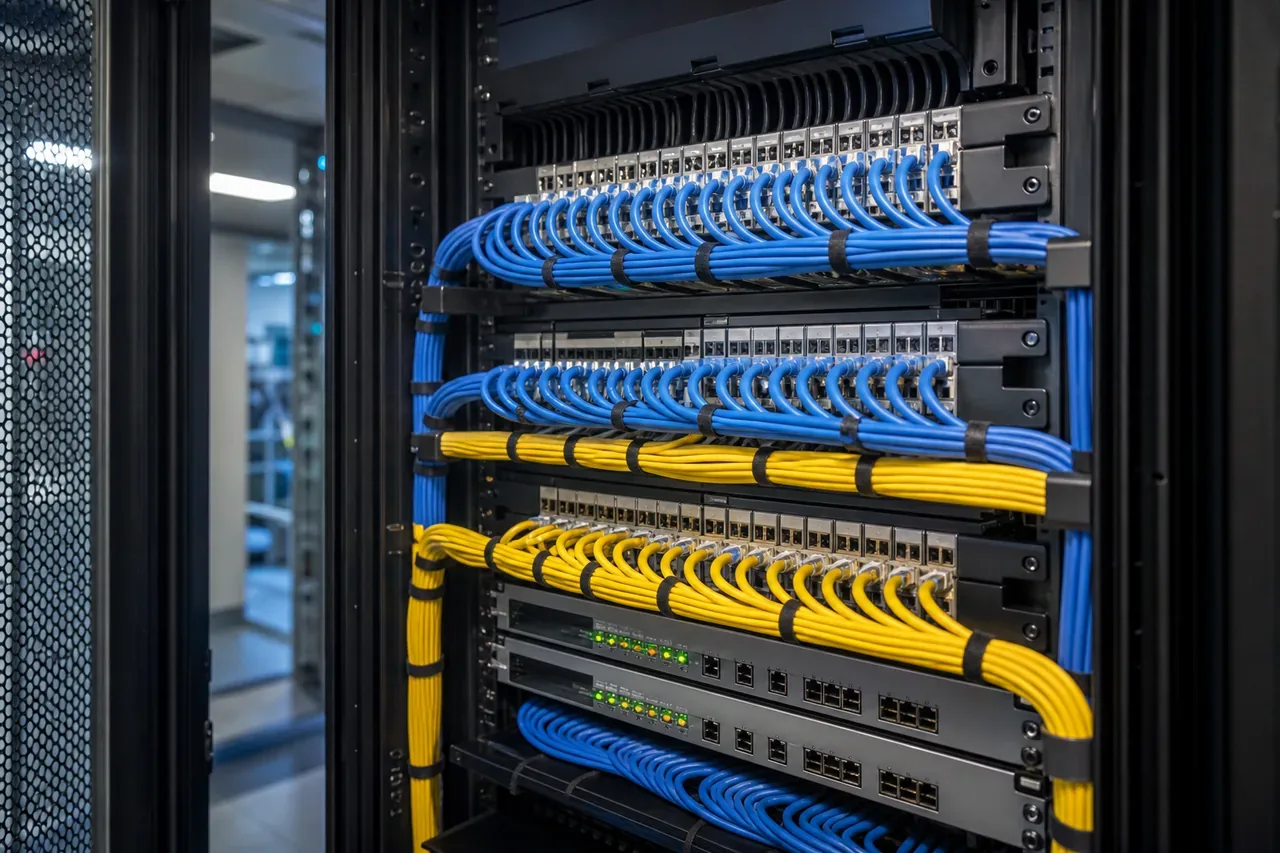
A More Organised Rack. A More Manageable Network.
Whether your network cabinet has become overcrowded, your cables are difficult to maintain or your infrastructure needs reorganisation before an upgrade, Integrated Solutions Technology can help you assess the problem and plan the right improvements.