

Connect Your Infrastructure. Without Letting Distance Hold You Back.
Fibre optic cabling in Nigeria for business backbones and links between buildings, with fibre termination, patching and verification.
When Your Network Needs to Go Further, the Infrastructure Matters.
Fibre optic cabling provides a practical foundation for high-bandwidth network links, particularly where copper cabling may not suit the distance, capacity or electrical conditions.
High-Capacity Connectivity
Support demanding network applications with fibre links selected for the required transmission speeds and compatible equipment.
Connect Across Greater Distances
Establish suitable connections between floors, buildings and network distribution points beyond the practical limits of conventional copper Ethernet cabling.
Resistance to Electrical Interference
Optical fibre carries data using light rather than electrical signals, making it immune to electromagnetic interference along the fibre itself.
Infrastructure for Future Expansion
Plan fibre routes, cable capacity and termination arrangements with changing network requirements in mind.
The Right Fibre. The Right Route. A Connection You Can Rely On.
We help organisations plan and implement fibre infrastructure around their physical environment and connectivity requirements.

Plan the Connection Before the Cable Is Installed.
Every fibre installation starts with understanding what needs to be connected.
We review the proposed endpoints, transmission requirements, route distances, available pathways and existing network infrastructure.
This helps establish suitable fibre cable specifications, installation routes, termination locations and the supporting components required for the project.
The Connections Behind High-Capacity Networks.
Explore the equipment, installation activities and technical details involved in enterprise fibre optic infrastructure.
Images illustrate the equipment and work involved.
Enterprise Fibre Backbone Installation
Fibre optic cable routes connecting suitable network distribution points, equipment rooms and building infrastructure.
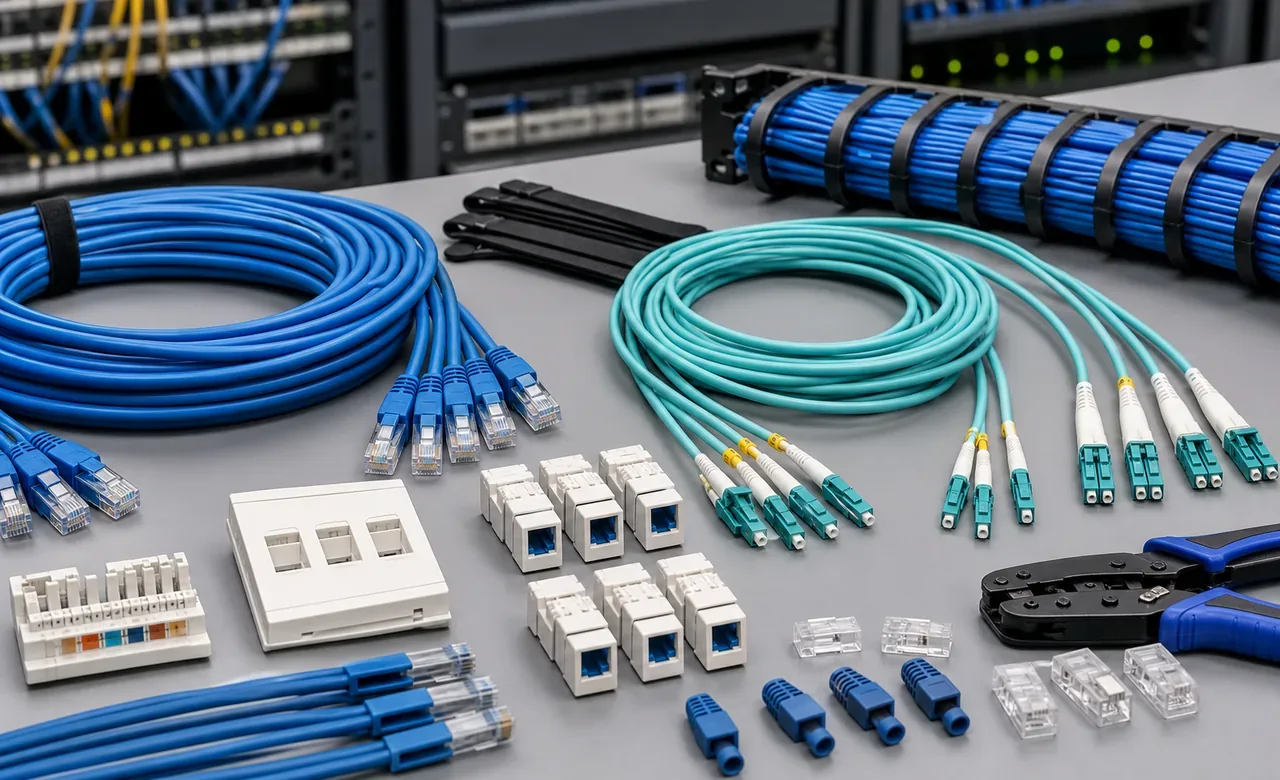
Fibre Splicing & Termination
Fibre preparation, compatible connection methods and protected terminations within appropriate splice enclosures or distribution equipment.
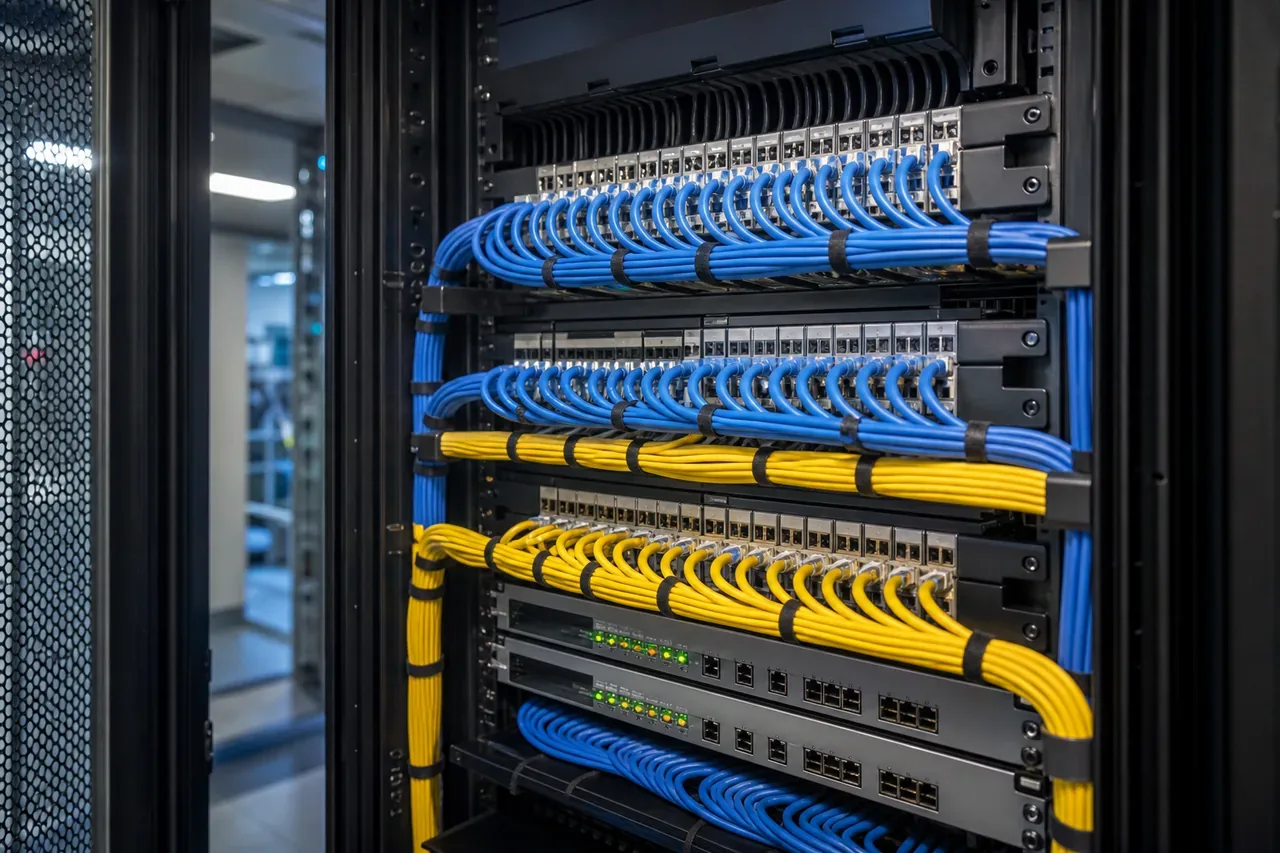
Fibre Patch Panels & Distribution Frames
Organised fibre connections installed in suitable patch panels and optical distribution arrangements for easier identification and maintenance.
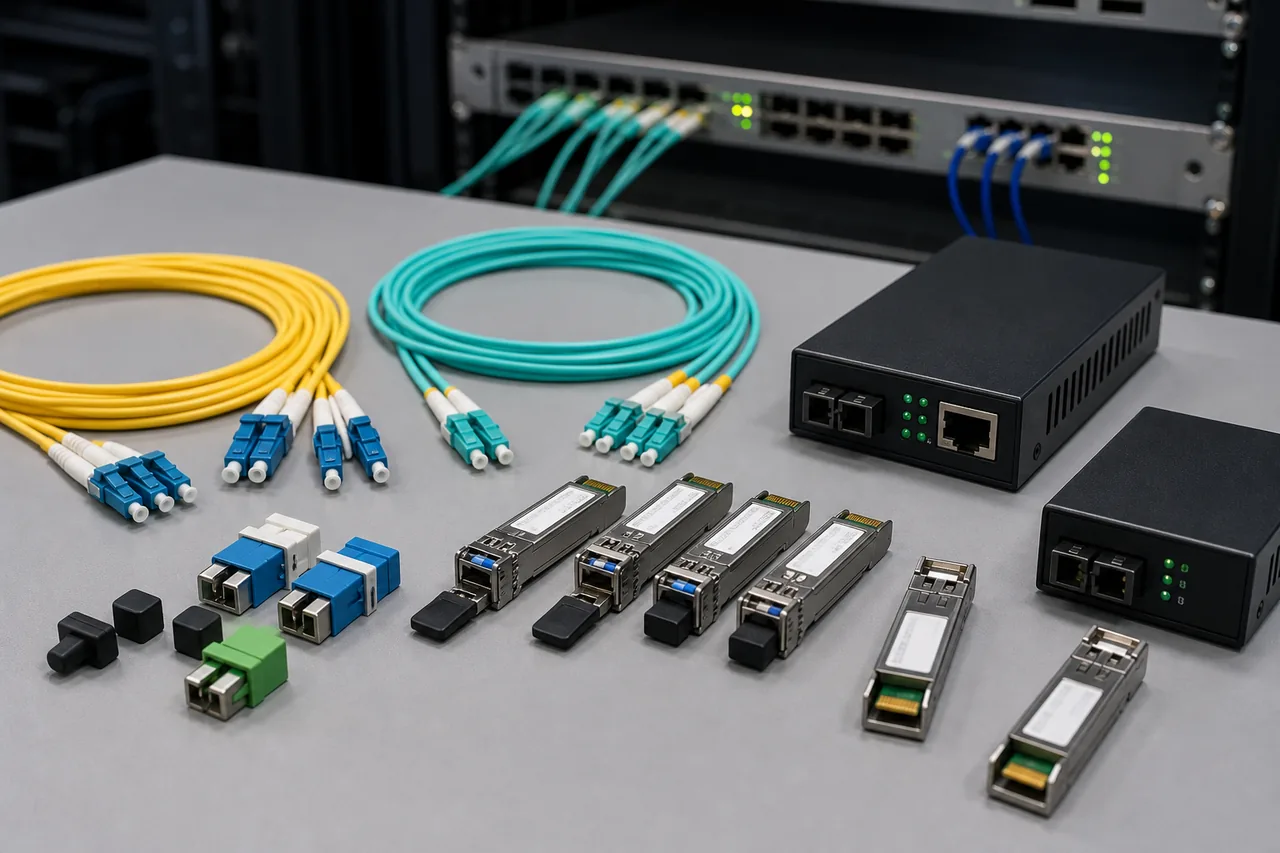
Fibre Link Inspection & Testing
Appropriate optical measurements and connection checks performed against the agreed verification requirements.
Your Fibre Optic Installation Questions, Answered.
Fibre optic cabling uses thin strands of glass or other optical material to transmit information as pulses of light. It is commonly used for high-capacity network connections, building backbones, campus networks and telecommunications infrastructure.
The cost depends on the fibre type, cable length, number of fibres, installation route, termination requirements, splicing, accessories and testing scope. Underground routes, difficult access and civil works may significantly affect the project cost. A site survey helps establish a suitable quotation.
Integrated Solutions Technology provides fibre optic cabling as part of its network and structured cabling services. The installation method, splicing and testing requirements, available resources and project location should be confirmed during consultation.
Single-mode fibre is commonly selected for longer-distance connections and uses compatible single-mode optical transceivers. Multimode fibre is often used for shorter premises and data centre links with compatible multimode transceivers. Selection depends on distance, network speed, optical equipment and the overall link budget.
Neither is automatically the best choice for every connection. Copper Ethernet cabling is practical for many workstation and device connections, while fibre is particularly useful for longer distances, higher-capacity backbones and environments where electromagnetic interference is a concern. Many business networks use both technologies.
Yes. Fibre is frequently used to connect buildings on a business premises or campus. The proposed route, distance, suitable cable construction, termination arrangements and any required external works should be assessed before installation.
Yes. Suitable fibre backbone cabling can connect network distribution points on different floors. The design should account for vertical cable pathways, building conditions, fire-safety requirements and the relevant network equipment.
Fibre optic splicing joins optical fibres together to create a continuous transmission path. Fusion splicing uses specialised equipment to join prepared fibre ends, while mechanical splicing uses a different joining arrangement. The chosen method depends on the project requirements.
Termination prepares an optical fibre for connection to another fibre or network device through a suitable connector or termination arrangement. Correct preparation, connector compatibility and cleanliness are important for link performance.
An optical distribution frame or fibre patch panel provides an organised location for fibre termination, connection and management. It helps technicians identify fibre links and carry out maintenance or approved changes.
An Optical Time Domain Reflectometer, or OTDR, sends light pulses into a fibre to help identify and characterise events such as splices, connectors, bends or breaks along the link. It is useful for diagnostics and detailed fibre assessment, but does not replace every other required optical test.
An Optical Loss Test Set (OLTS) measures end-to-end optical insertion loss and is used for basic, or Tier 1, fibre certification. OTDR testing characterises individual events along the link and is added for Tier 2 testing. The required method depends on the project specifications.
Fibre faults can be investigated through appropriate inspection and diagnostic testing. Depending on the available access and equipment, testing may help identify loss events, damaged connections or the approximate location of a cable fault.
Fibre infrastructure generally requires limited routine attention once correctly installed, but connectors, patching arrangements, equipment interfaces and exposed cable routes may need periodic inspection. Faults and damaged connections should be assessed using appropriate procedures.
Yes. Suitable fibre types and compatible optical transceivers can support 10Gbps and substantially higher network speeds. The achievable speed and distance depend on the selected fibre, transceiver specification, connectors and overall link performance.
Existing fibre infrastructure can be assessed for expansion. Additional routes, terminations or fibre strands may be needed, depending on spare capacity, cable condition, available pathways and network requirements.
The timeframe depends on route length, building conditions, access restrictions, cable quantities, termination work, external civil works and testing requirements. A defined project scope helps establish an appropriate installation schedule.
Formal fibre certification can be considered when specified in the project requirements and supported by the necessary test equipment and competent personnel. The required standards, measurements and reporting format should be agreed before work begins.
Useful information includes the project location, endpoints to be connected, estimated distance, number of links, required network speed, existing cable pathways and any splicing or certification requirements.
Contact Integrated Solutions Technology with the locations you want to connect, your current network arrangement and the capacity you require. We can review your needs and advise on the next steps towards a fibre cabling assessment.
The Distance Between Your Systems Shouldn't Limit Your Network.
Whether you're linking buildings, upgrading a network backbone or preparing your facility for greater data demand, Integrated Solutions Technology can help you plan and implement fibre optic infrastructure designed around your connectivity requirements.