
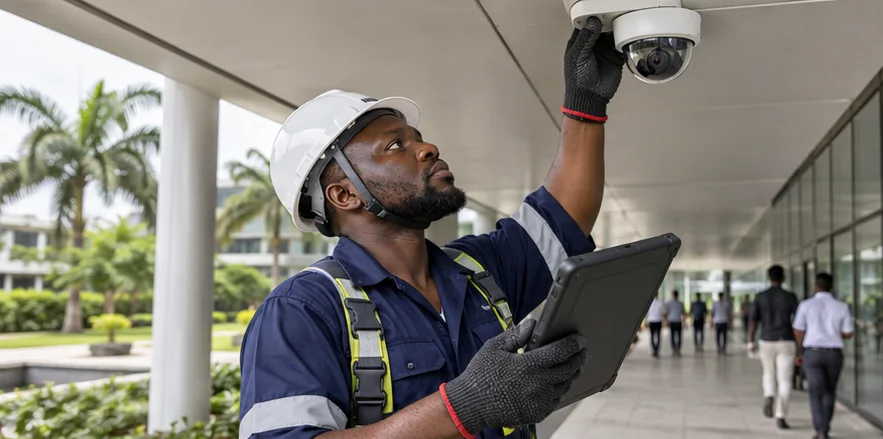
Your Security System Should Work When It Matters.
Security system maintenance and upgrades in Nigeria, including CCTV, video recorder servicing, access control diagnostics and replacement.
A Security System Is Only Useful When It Works.
Regular checks can identify faulty cameras, missing recordings and unreliable access controls before they disrupt operations.
Maintain Surveillance Visibility
Identify camera faults, obstructed views and image-quality problems that may affect the areas your system is intended to monitor.
Check Recording & Access Functions
Review relevant recording status, playback functionality and access-control operation to identify issues requiring corrective work.
Address Ageing Equipment
Assess whether faulty or unsupported components should be repaired, replaced or upgraded to meet current requirements.
Plan Maintenance With Greater Confidence
Maintain clearer records of inspections, identified faults, corrective actions and outstanding system recommendations.
Find the Fault. Understand the Cause. Make the Right Improvement.
We help organisations investigate existing security infrastructure and determine appropriate maintenance or upgrade work.
Know the Condition of Your Security System.
A thorough review begins with understanding which devices are installed and the problems being experienced.
We assess relevant CCTV equipment, recording devices, access-control components, physical connections and available system alerts.
The findings help identify equipment faults, connectivity issues, unsuitable configurations and other conditions that may require maintenance or further investigation.
The Technical Work Behind Dependable Protection.
Explore the inspection, repair and upgrade activities involved in maintaining existing electronic security systems.
Images illustrate the equipment and work involved.
CCTV Camera Inspection & Servicing
Assessing camera condition, mounting, connections, image quality and relevant operating functions.
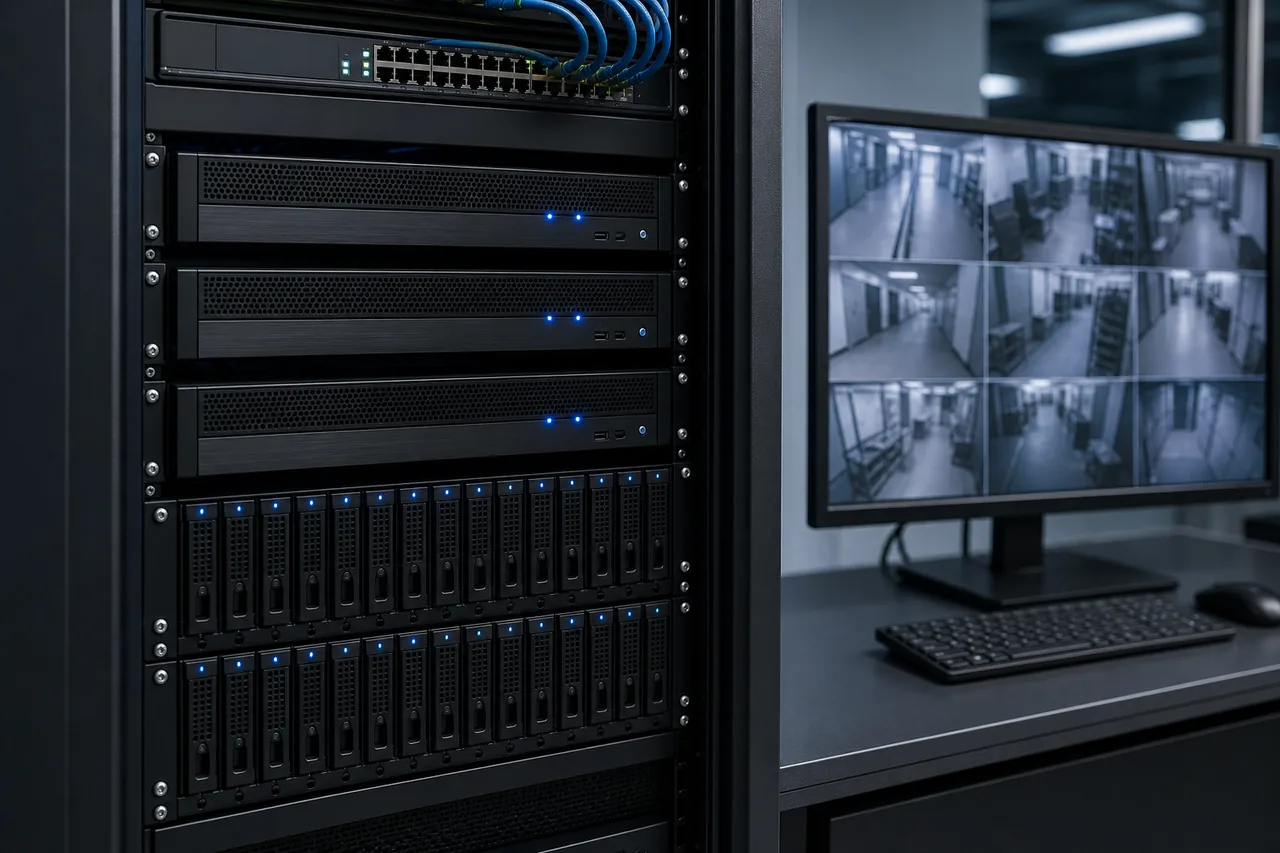
DVR, NVR & Recording System Maintenance
Reviewing recorder health, recording schedules, storage alerts, playback functionality and relevant equipment conditions.
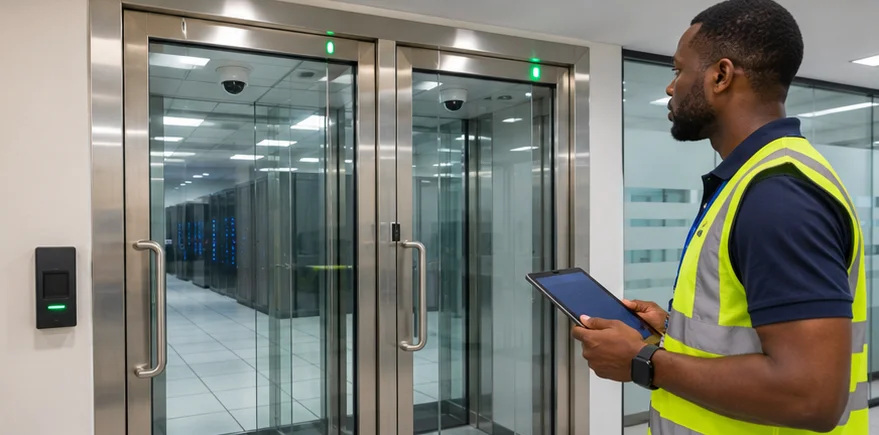
Access Control Diagnostics & Maintenance
Inspecting compatible access readers, controllers, door hardware and authorised entry functions.
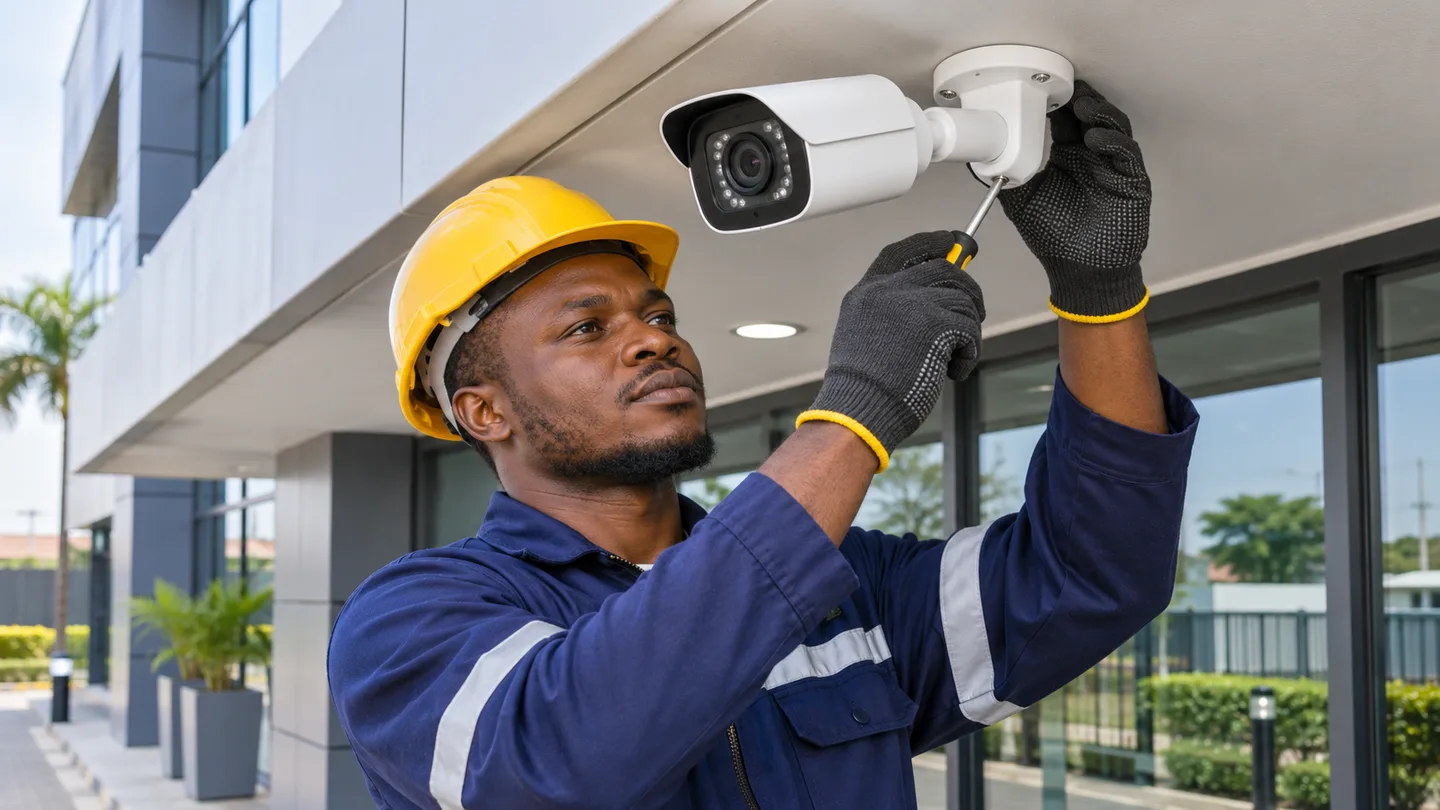
Security Equipment Replacement & Upgrades
Replacing suitable cameras, recording components or access-control devices according to an approved upgrade plan.
Your Security System Maintenance Questions, Answered.
Security system maintenance involves inspecting, testing, servicing and correcting faults in electronic security equipment. It may include CCTV cameras, recording devices, access-control systems, supporting connections and related components.
Integrated Solutions Technology offers Security System Maintenance & Upgrades for existing security installations. Support for specific equipment depends on the system type, manufacturer, technical condition and agreed maintenance requirements.
The cost depends on the number of devices, type of system, reported faults, site location, required replacement parts and maintenance scope. A routine inspection and a complex equipment repair may have very different costs.
Maintenance frequency depends on the operating environment, manufacturer recommendations, equipment condition and how important the surveillance system is to the property. Outdoor cameras, high-use systems and critical surveillance environments may need more frequent checks.
Possible causes include power problems, faulty cabling, network issues, damaged camera hardware, incompatible settings or recording equipment faults. The correct solution depends on identifying where the video connection is failing.
A faulty camera can be assessed for suitable corrective action. Some problems may involve connections or configuration, while others require component servicing or complete camera replacement. Repair feasibility depends on the camera model and fault.
Recording may stop because of storage faults, full or unavailable drives, configuration changes, recorder failures, camera disconnections or power problems. The system should be checked before replacing equipment.
Compatible surveillance drives may be replaced after reviewing the recorder specifications and existing storage configuration. Any available recordings, backup requirements and risk of footage loss should be assessed before the work begins.
Sometimes. Image quality may improve through appropriate cleaning, focus adjustments, viewing-angle changes, lighting improvements or compatible configuration changes. However, equipment resolution and optical limitations may require a camera upgrade.
Some systems support partial upgrades, depending on camera technology, cabling, recorder capabilities and compatibility. An assessment helps establish whether existing components can be retained or need replacement.
Additional cameras may be possible if the recorder, network, power supply and storage infrastructure have suitable capacity. Where these limits have been reached, supporting equipment may need expansion or replacement.
Remote access problems may involve internet connectivity, mobile application changes, account permissions, router configuration or recorder settings. Troubleshooting should review the relevant connection and security requirements.
Supported firmware updates may address vulnerabilities, bugs or compatibility issues. Updates should be selected for the exact equipment model and installed using manufacturer-supported procedures, with necessary configuration backups and testing.
Compatible biometric readers, RFID card readers, controllers and locking hardware can be considered for maintenance. The specific work depends on system architecture, device condition and authorised access to its management functions.
Possible causes include credential permissions, reader faults, controller communication problems, power-supply issues or locking hardware failures. Where the door forms part of an emergency escape route, any fault must be assessed promptly in accordance with applicable safety arrangements.
Behaviour depends on the lock type, backup power arrangement and door hardware. A compliant emergency escape arrangement must not be compromised during maintenance or repair. The correct response requires a review of the specific door and approved safety design.
It may be possible to replace compatible readers or credentials while retaining some existing controllers and wiring. Communication protocols, power requirements, manufacturer support and security features must be checked first.
Some inspections and non-intrusive checks may be completed without interrupting service. Equipment replacement, firmware updates, network changes or door-lock work may require authorised maintenance windows and temporary security arrangements.
Existing third-party installations can be assessed, subject to equipment condition, available documentation, administrative access and manufacturer restrictions. Support for every product or proprietary system cannot be assumed.
Planned maintenance arrangements can be discussed according to the number of sites, equipment, inspection requirements and support needs. Any recurring schedule, response commitment or service-level agreement must be confirmed in writing.
Response availability depends on the support agreement, site location and technical resources. Emergency attendance and 24-hour support should be explicitly agreed rather than assumed.
Not necessarily, but some repairs, drive replacements, resets or software changes can affect stored footage or records. Relevant data retention, backup and preservation requirements should be reviewed before intrusive work.
The timeframe depends on the reported problem, equipment quantities, fault diagnosis, replacement-part availability, system complexity and approved access arrangements. A technical assessment helps establish the appropriate work and schedule.
An agreed maintenance report may include inspected equipment, identified faults, corrective actions, replaced parts, verification results and outstanding recommendations.
Useful details include the property location, system type, equipment manufacturer and models, number of cameras or controlled doors, reported faults and whether access is available to the system configuration.
Contact Integrated Solutions Technology with information about your installed security equipment and the problem or maintenance requirement. We can review the details and discuss the appropriate assessment and support scope.
Security Doesn't End When Installation Is Complete.
Whether you're dealing with faulty cameras, recording problems, unreliable access control or ageing security equipment, Integrated Solutions Technology can help you assess your system and plan the maintenance or upgrades it needs.