
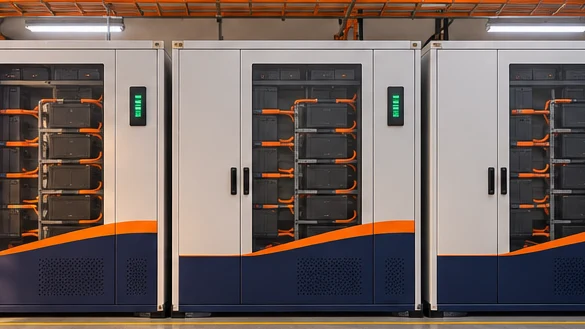
Store More Energy. Stay Powered When It Matters.
Solar battery storage in Nigeria, from lithium battery selection to installation and integration with compatible inverters for backup power after dark.
Make Better Use of the Energy Available to You.
With properly sized battery storage, you can retain energy for later use and make your power system more flexible.
Backup Power When the Grid Fails
Support essential appliances and equipment during electricity interruptions with sufficient stored energy and compatible inverter capacity.
Energy Beyond Daylight Hours
Use stored solar electricity during the evening or at night, depending on your battery charge and electricity consumption.
Reduced Generator Dependence
Make better use of battery backup to reduce generator operating hours where sufficient stored energy is available.
Storage Designed Around Your Needs
Choose battery capacity based on your daily consumption, desired backup duration, equipment compatibility and future requirements.
The Right Battery Is About More Than Capacity.
We help you understand these requirements before selecting and installing a suitable energy storage solution.

Understand How Much Backup Energy You Really Need.
Every household and business has different electricity usage patterns and backup expectations.
We assess the appliances you want to support, their energy consumption, expected operating hours and existing inverter system.
This helps determine an appropriate storage capacity while identifying any equipment or compatibility requirements that should be addressed before installation.
The Technology That Keeps Energy Available.
Explore the components and professional installation arrangements involved in dependable solar battery storage.
Images illustrate the equipment and work involved.
Lithium Battery Storage Installation
Modern lithium battery systems installed in suitable technical environments to provide stored electricity for compatible solar and inverter installations.
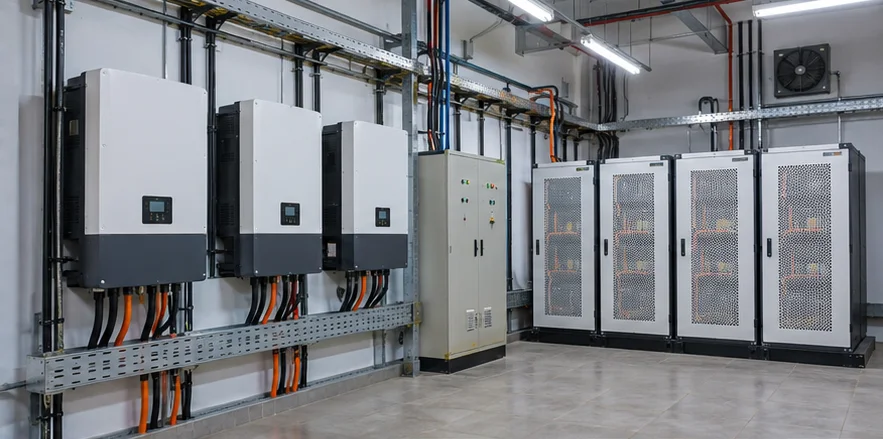
Hybrid Inverter & Battery Integration
Battery storage connected to compatible hybrid inverters to support charging, energy management and backup operation.
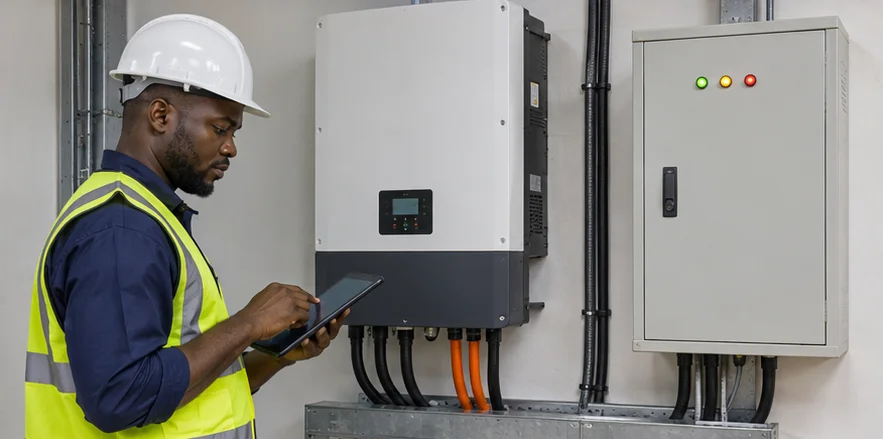
Battery System Configuration
Appropriate equipment settings, battery communication and electrical connections configured around the supported operating requirements.
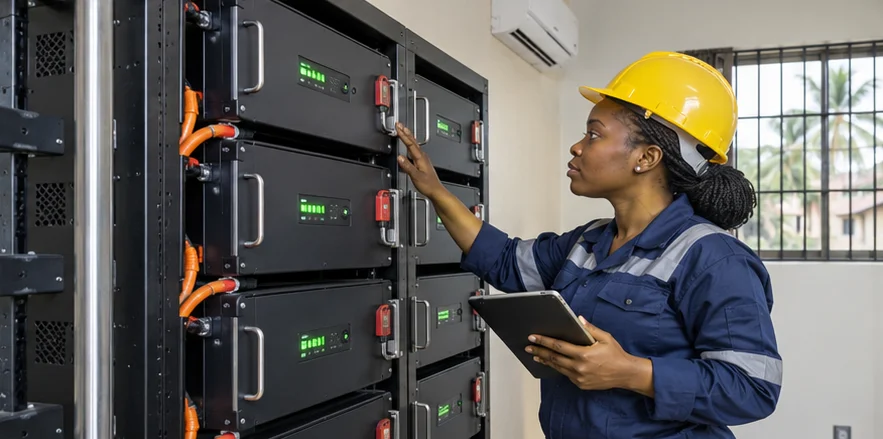
Storage Inspection & System Verification
Technical checks of battery equipment, connections, charging performance and system status before handover.
Your Solar Battery Questions, Answered.
The cost depends on battery technology, usable storage capacity, manufacturer specifications, inverter compatibility, installation requirements and supporting electrical equipment. A storage assessment helps determine the appropriate capacity and provides a basis for a suitable quotation.
The number depends on the usable capacity of each battery, the appliances you want to power and how long you need backup electricity. Battery quantity alone does not determine backup duration because battery models have different capacities and specifications.
Backup duration depends on the power consumed by connected appliances, usable battery capacity and system efficiency. For illustration, a battery delivering 4kWh of usable energy could theoretically support a constant 500W load for around eight hours. Actual performance varies with operating conditions and equipment specifications.
Lithium batteries generally offer higher usable capacity, longer cycle life and lower routine maintenance requirements, although specifications vary. Lead-acid batteries may have a lower initial purchase cost but typically require more attention and provide less usable energy for a comparable rated capacity.
Yes, if sufficient usable energy is stored to support your overnight electricity consumption. The required capacity depends on the appliances operating, their power demand and the number of backup hours you need.
Possibly. Compatibility depends on the inverter's supported battery chemistry, operating voltage, charging requirements and communication arrangements. The inverter and battery specifications should be checked before installation.
In some cases, yes. Expansion depends on battery compatibility, manufacturer requirements, system configuration and available inverter capacity. Batteries should not be connected together without confirming that the arrangement is supported.
Yes, solar panels can generate electricity in cloudy and rainy conditions, although their output is generally lower than in strong sunshine. Charging performance depends on available solar generation, system configuration and electricity consumption.
Many compatible inverter and battery systems support charging from grid electricity or a generator. The available options depend on the equipment and its configured operating modes.
Lithium battery lifespan depends on battery chemistry, cycle usage, operating temperature, depth of discharge and manufacturer specifications. Manufacturer cycle-life and warranty information should be considered when comparing products.
Yes, although modern lithium batteries typically require less routine maintenance than traditional lead-acid batteries. Appropriate operating temperatures, clean and dry equipment areas, performance monitoring and periodic professional inspections help support long-term operation.
Battery systems should be installed in locations suitable for their specifications and safety requirements, with appropriate protection from moisture, excessive heat and physical damage. Installation should follow manufacturer instructions and applicable electrical safety requirements.
Yes. When sufficient stored energy is available, battery backup can reduce the need to operate a generator. Actual fuel savings depend on your electricity use, charging sources, battery capacity and operating patterns.
Existing storage systems can be assessed to determine suitable replacement or expansion options. Any proposed upgrade depends on equipment compatibility, installation conditions and the requirements of the complete power system.
Contact Integrated Solutions Technology with your location, existing inverter details, appliances, electricity consumption and preferred backup duration. We can review the information and recommend the next steps towards a suitable battery storage proposal.
The Right Battery Makes Your Power System Work Better for You.
Whether you're adding storage to a new solar installation, upgrading your existing battery bank or looking for longer backup hours, Integrated Solutions Technology can help you identify a solution designed around your energy requirements.