
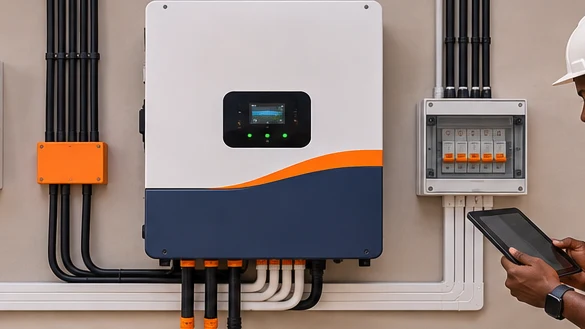
Smarter Power. Greater Flexibility. Less Dependence on the Grid.
Hybrid solar and inverter installation in Nigeria for homes and businesses using solar panels, battery storage and compatible grid or generator power.
Make Better Use of Every Available Power Source.
A properly configured hybrid solar system helps manage these different sources to support your energy requirements.
More Reliable Backup Options
Use stored battery energy and available solar generation to support designated appliances and equipment during grid interruptions.
Reduced Generator Dependence
Make better use of solar electricity and battery storage to reduce generator operating hours where system conditions permit.
Smarter Energy Management
Allow a compatible hybrid inverter to manage power sources, battery charging and electricity supply according to its configuration.
Flexible System Planning
Choose a system designed around your current electricity requirements, with suitable provisions for future expansion where practical.
Every Power Source Has a Role. We Help Them Work Together.
We approach each project by understanding your electricity requirements, backup expectations and existing power infrastructure.

Understand What Your Hybrid System Needs to Support.
The right hybrid inverter system begins with understanding how electricity is used in your home or business.
We assess your connected appliances, daily energy consumption, peak loads, existing grid supply and backup expectations.
This helps determine suitable inverter capacity, battery storage requirements and the role solar generation should play in your electricity supply.
The Technology Behind Flexible Electricity Supply.
Explore how hybrid solar equipment is installed and integrated to support electricity needs across homes and business environments.
Images illustrate the equipment and work involved.
Hybrid Solar Inverter Installation
Wall-mounted hybrid inverters installed in suitable indoor technical areas to manage compatible solar generation, battery storage and available electricity sources.
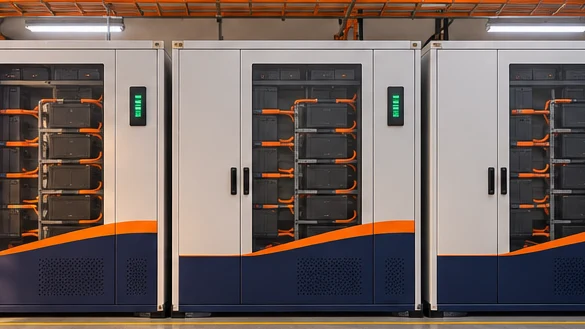
Lithium Battery Storage Systems
Stationary battery storage equipment installed and configured to provide stored energy for later use.
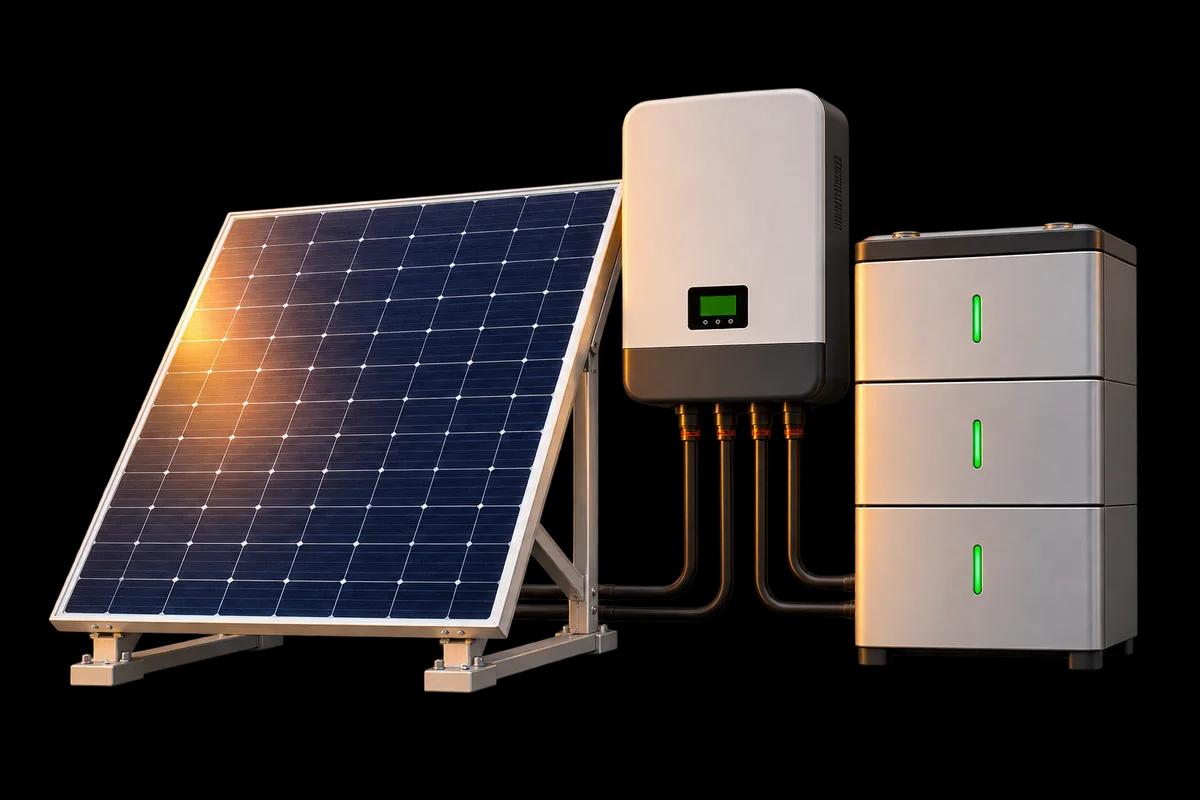
Solar Panel & Inverter Integration
Photovoltaic panels connected through suitable electrical infrastructure to compatible hybrid inverter systems.
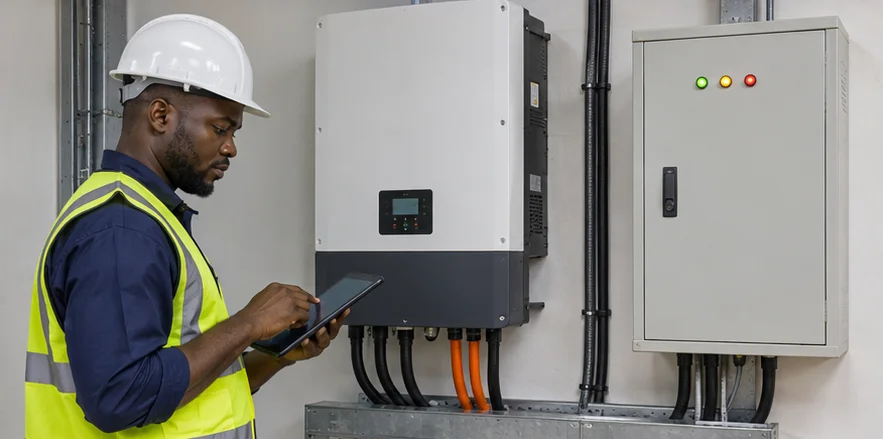
Power Distribution & System Configuration
Appropriate electrical protection, distribution connections and system configuration supporting safe operation and the intended power management arrangement.
Your Hybrid Solar Questions, Answered.
A hybrid solar inverter system combines compatible solar generation, battery storage and one or more additional electricity sources, such as the national grid or a generator. It manages how electricity is supplied to connected loads and how batteries are charged, according to the equipment's capabilities and configuration.
During daylight hours, solar panels generate electricity that can supply connected loads and, when sufficient energy is available, charge the batteries. At night, stored battery energy may supply the loads. Grid or generator power can provide additional electricity where supported and configured.
A properly installed hybrid inverter with sufficient battery storage and the required backup functionality can supply designated appliances during a grid outage. Actual backup availability depends on the inverter configuration, battery charge and connected electrical loads.
A hybrid inverter typically combines solar power conversion with battery charging and energy management capabilities. Other inverter types may be designed primarily for grid-connected solar generation or standalone battery backup. The specific differences depend on the equipment and its supported functions.
Some hybrid inverter models can operate with compatible batteries and grid electricity before solar panels are added. This depends on the manufacturer's specifications and system configuration. Not every hybrid inverter supports the same operating arrangements.
Many hybrid inverters support generator integration, but compatibility is not automatic. The generator's specifications, inverter capabilities, transfer arrangements and electrical protection requirements must be assessed before connection.
The correct inverter size depends on the appliances and equipment you want to power, their simultaneous power demand, starting currents and future requirements. Battery capacity and solar generation must also be considered when designing the complete system.
Backup duration depends primarily on available battery energy, inverter efficiency and the electricity consumed by connected appliances. A larger inverter alone does not guarantee longer backup time.
A 5kW inverter may be suitable for some households, but not all. Its suitability depends on simultaneous electrical loads, appliance starting requirements and how the system is intended to operate. Battery storage and solar panel capacity must be sized separately.
Yes. Solar panels can generate electricity during cloudy and rainy conditions, although output is generally lower than under strong sunlight. Available battery storage and compatible grid or generator sources can help manage periods of reduced solar generation.
Battery requirements depend on the inverter model and intended operating arrangement. If backup power during grid outages is a priority, suitable battery storage is normally required.
In some cases, an existing installation can be upgraded or modified. The options depend on inverter compatibility, battery technology, wiring, electrical protection and the condition of the current equipment. An assessment is recommended before making changes.
The cost depends on inverter capacity, solar panel requirements, battery technology and capacity, existing electrical infrastructure, equipment specifications and installation complexity. An energy assessment helps establish a suitable configuration and quotation.
Yes. Our solar maintenance services include suitable inverter and battery system inspections, troubleshooting and technical support according to the equipment and agreed service scope.
Contact Integrated Solutions Technology with your property location, appliances, electricity usage and existing power arrangements. We can discuss your backup requirements and identify the next steps towards a suitable hybrid system proposal.
Better Power Begins With the Right Combination.
Whether you're installing a new hybrid solar system, adding battery backup or upgrading an existing inverter, Integrated Solutions Technology can help you identify a solution designed around your electricity needs.