
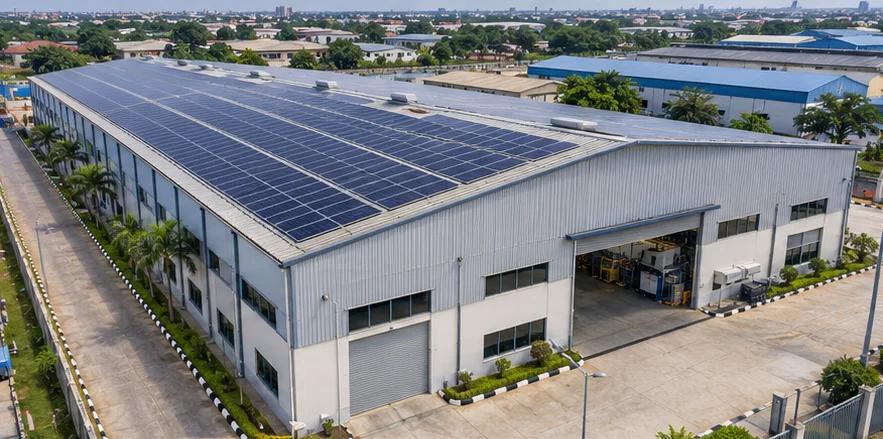
Power Your Operations. Take Control of Energy Costs.
Industrial solar installation in Nigeria for factories and warehouses, designed around machinery loads, operating hours and existing power systems.
Smarter Energy for More Efficient Industrial Operations.
A properly designed industrial solar installation can help you make better use of available sunlight while reducing reliance on expensive conventional power sources.
Reduce Generator Fuel Consumption
Use solar-generated electricity to supplement your existing power supply and reduce generator operating hours where system conditions permit.
Manage Industrial Energy Expenses
Reduce dependence on purchased electricity and generator fuel through solar generation designed around your facility's energy consumption.
Support Essential Operations
Integrate suitable solar and backup systems to support selected industrial loads, administrative facilities and other operational requirements.
Plan for Future Energy Demand
Consider production growth, additional equipment and changing electricity requirements when developing your industrial solar energy strategy.
Every Industrial Facility Has Different Energy Demands.
Our approach is designed to help you move from understanding your facility's electricity requirements to implementing a practical solar energy solution.
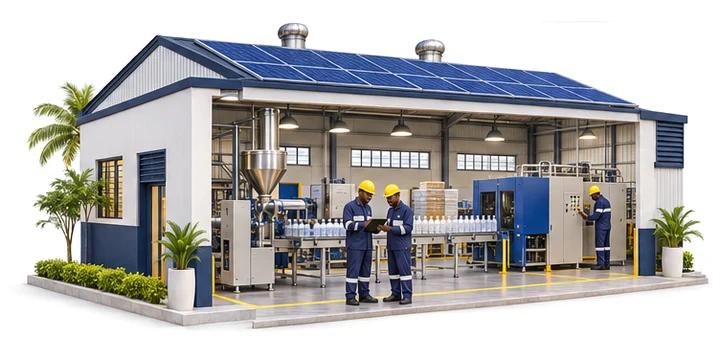
Understand Your Energy Demand Before Making the Investment.
A successful industrial solar project begins with knowing how electricity is used throughout your facility.
We assess relevant equipment loads, daily consumption, operating schedules and existing power sources to understand your energy requirements.
This helps identify suitable opportunities for solar generation, appropriate system capacity and the electrical loads that may benefit most from solar integration.
Solar Infrastructure Built Around Industrial Environments.
Explore the equipment, technical processes and installation arrangements involved in industrial solar energy projects.
Images illustrate the equipment and work involved.
Factory Rooftop Solar Installation
Solar photovoltaic panels arranged across suitable factory rooftops to generate electricity for compatible industrial and supporting loads.
Warehouse & Industrial Facility Solar
Solar installations designed around available roof or ground space, facility conditions and electricity demand.
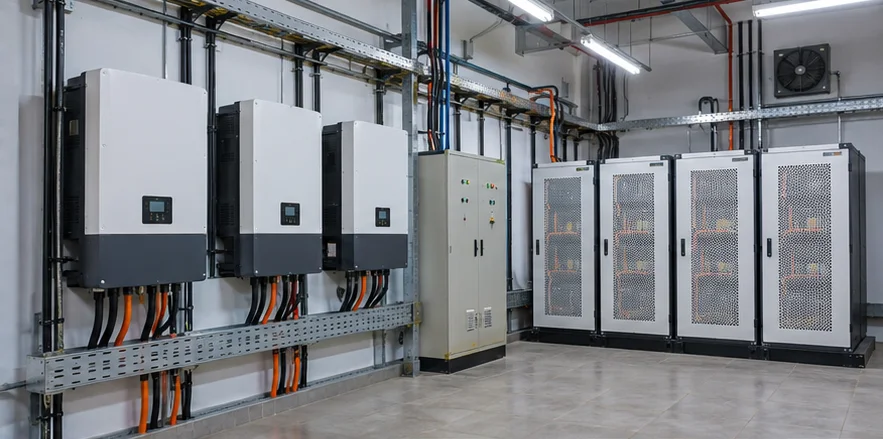
Industrial Inverter & Battery Systems
Compatible power conversion and energy storage equipment installed in suitable technical spaces to support the intended system configuration.
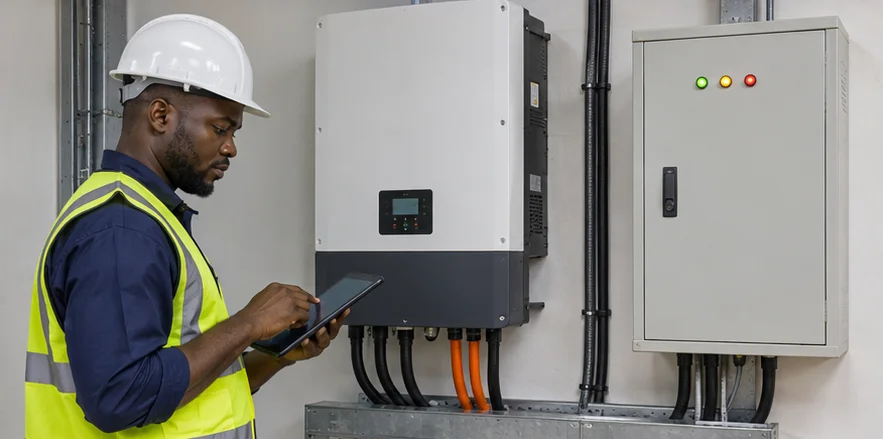
Electrical Integration & Commissioning
Professional installation, electrical connections and system verification carried out according to the agreed infrastructure requirements.
Your Industrial Solar Questions, Answered.
The cost depends on your facility's energy consumption, required solar capacity, equipment specifications, battery storage requirements, installation conditions and integration with existing electrical infrastructure. An industrial energy assessment helps establish the appropriate system scope and quotation.
Solar power can supply part or all of a factory's electrical demand if the system is designed with sufficient generation and supporting capacity. However, many industrial facilities have high-load equipment that may require continued grid or generator support. The suitable arrangement depends on actual load measurements and operating conditions.
Yes. Solar generation can reduce the amount of electricity a facility needs from diesel generators, potentially lowering fuel consumption and operating expenses. The financial benefit depends on system capacity, electricity usage, generator operation and available sunlight.
Some industrial equipment can operate on appropriately designed solar power systems. However, heavy machinery may have substantial running loads, starting currents or other electrical requirements. These must be assessed before determining whether solar can support the equipment directly or supplement another power source.
Yes. Suitable industrial solar and hybrid power systems can be designed to work alongside compatible grid and generator infrastructure. The integration approach depends on existing electrical equipment, protection arrangements and operational requirements.
Space requirements depend on the desired solar capacity, panel specifications, roof layout, structural suitability, shading and maintenance access. A technical site assessment helps determine whether the available rooftop is appropriate or whether another installation location should be considered.
Some activities can be scheduled while a facility remains operational. However, electrical integration, equipment changeovers or commissioning may require planned shutdowns or restricted access. Installation scheduling should be coordinated with the facility's operational and safety requirements.
Not always. Some industrial solar systems are designed primarily to offset daytime electricity consumption, while others use batteries for energy storage or backup. Whether storage is necessary depends on the facility's operating requirements and the intended system configuration.
The timeframe depends on the size and complexity of the installation, equipment availability, site readiness, structural requirements, electrical integration and commissioning activities. A project assessment helps establish a realistic implementation schedule.
A useful assessment compares your facility's electricity consumption, existing energy costs, expected solar generation, system investment and ongoing maintenance expenses. This helps estimate potential savings and financial payback under clearly stated assumptions.
Integrated Solutions Technology provides solar maintenance and technical support services. The scope can include appropriate inspections, equipment checks, troubleshooting and performance-related maintenance according to the installation and agreed service arrangements.
Contact Integrated Solutions Technology with your facility location, electricity consumption information, operating hours, existing power arrangements and project objectives. We can discuss the requirements and determine the next steps towards a site assessment and suitable solar proposal.
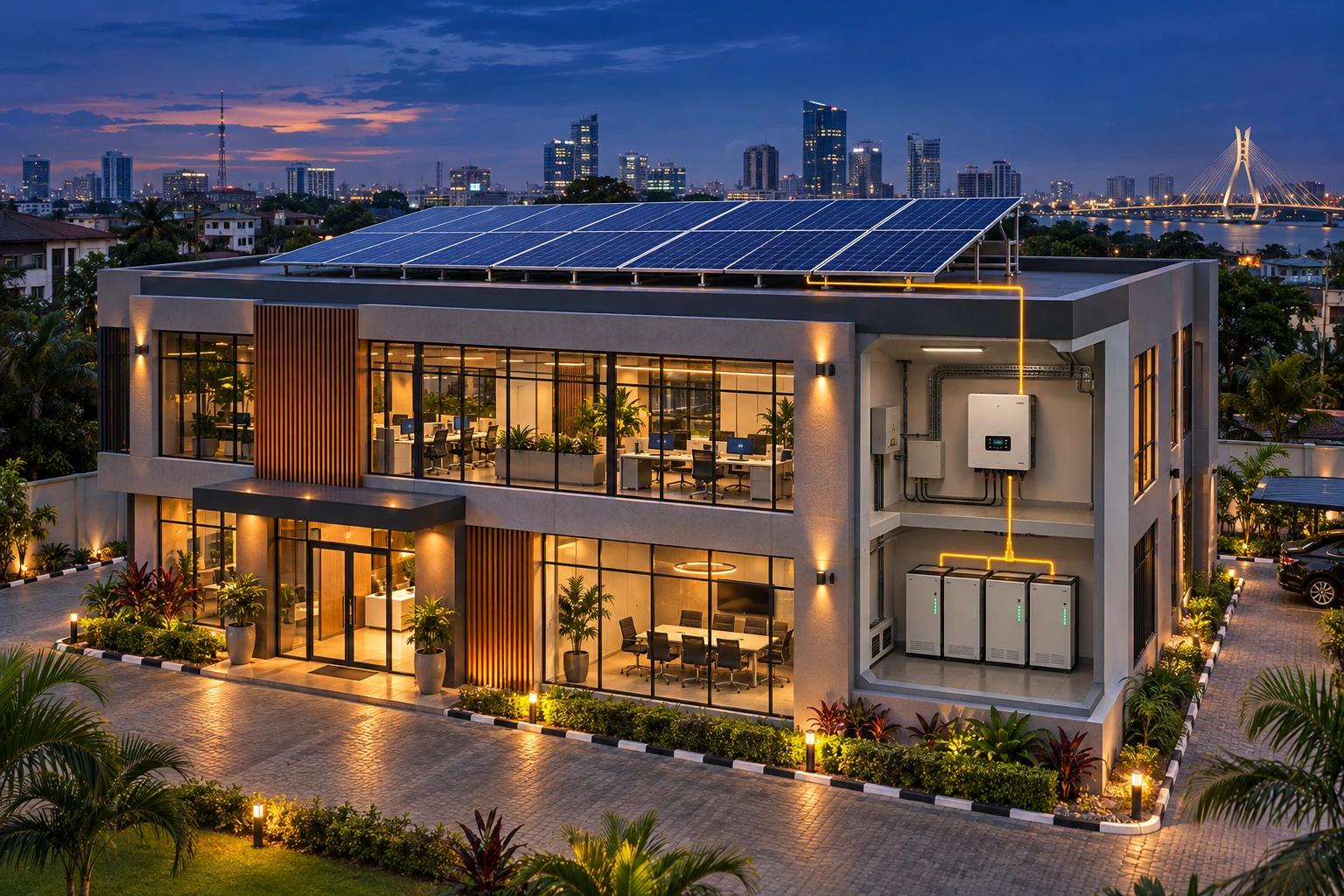
Better Energy Planning Starts With Understanding Your Facility.
Whether you're exploring solar for a manufacturing plant, planning a factory rooftop installation or looking to reduce diesel generator dependence, Integrated Solutions Technology can help you assess your requirements and develop a suitable industrial solar solution.