
See What's Happening. Find What Matters.
Video monitoring and recording systems in Nigeria, including DVR and NVR setup, storage planning, live viewing and footage retrieval.
A Camera Captures the View. The Right System Makes It Accessible.
A well-planned monitoring and recording environment considers how footage is captured, stored, viewed and managed throughout its required retention period.
Accessible Live Monitoring
Bring compatible camera feeds into suitable viewing interfaces for authorised personnel monitoring designated locations.
Planned Video Retention
Size recording storage around camera quantities, video settings and the retention period your organisation requires.
Easier Footage Retrieval
Use supported playback, search and export features to locate relevant recordings more efficiently.
Controlled Access to Footage
Configure appropriate user permissions and security settings to limit who can view, manage or export recorded video.
Capture the Footage. Manage It Properly. Retrieve It When Needed.
We help organisations select suitable recording infrastructure, establish viewing access and configure systems around their defined surveillance requirements.

Plan the Recording System Around What You Need to Retain.
Recording capacity should be determined before purchasing storage equipment.
We review camera quantities, recording resolution, frame rates, compression settings, preferred recording schedules and the required footage retention period.
These requirements help inform suitable recorder specifications, storage capacity, network bandwidth and other infrastructure considerations.
From Camera Feeds to Usable Security Records.
Explore the infrastructure and operational interfaces behind professional surveillance monitoring and recording.
Images illustrate the equipment and work involved.
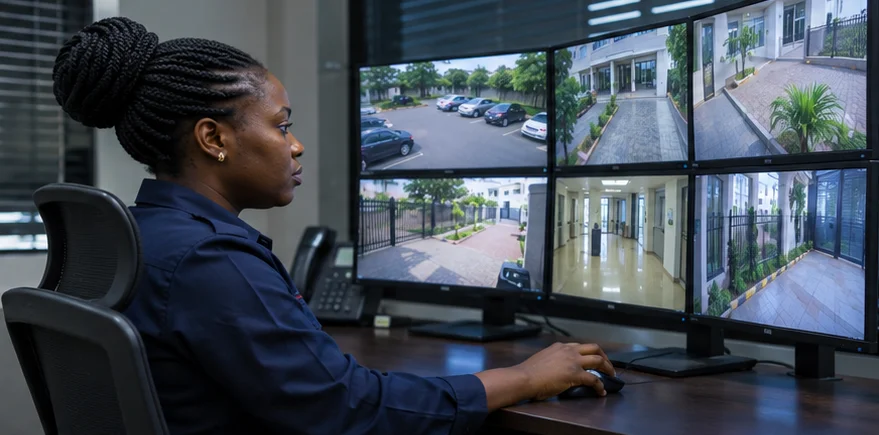
Security Monitoring Displays
Appropriate viewing arrangements presenting authorised live camera feeds across designated buildings and surveillance zones.
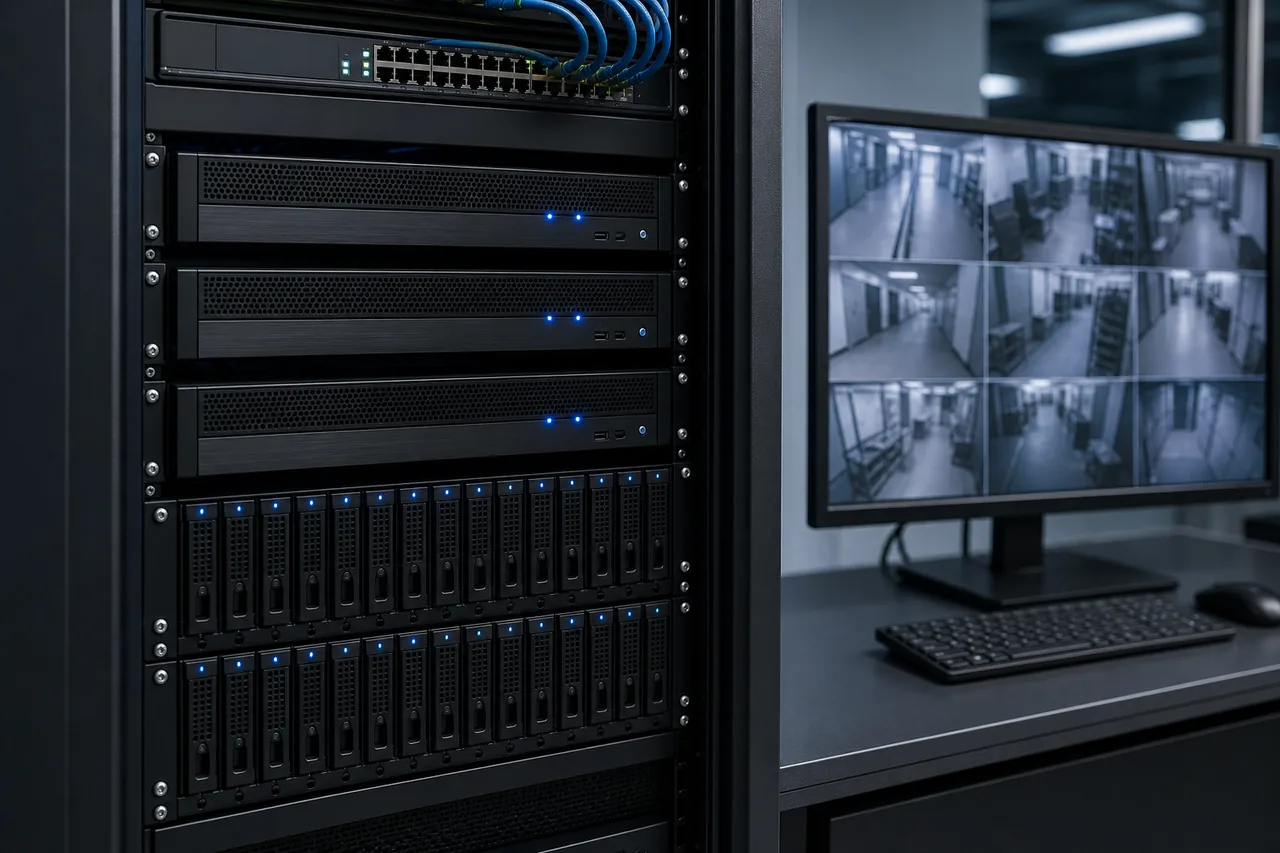
DVR & NVR Recording Equipment
Compatible recording devices installed to receive, manage and store footage from supported security cameras.
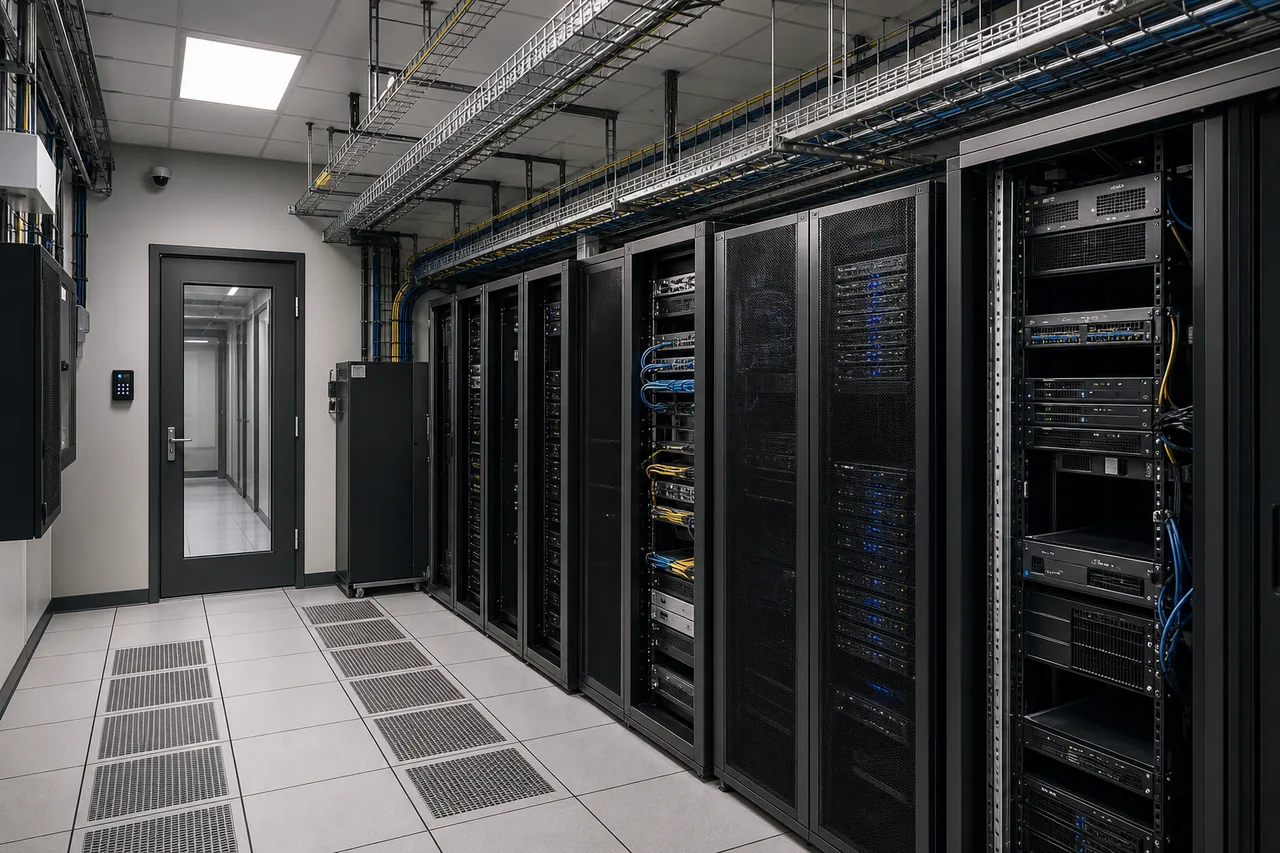
Surveillance Storage Infrastructure
Suitable recording drives and storage equipment configured around the approved camera count and footage retention requirements.
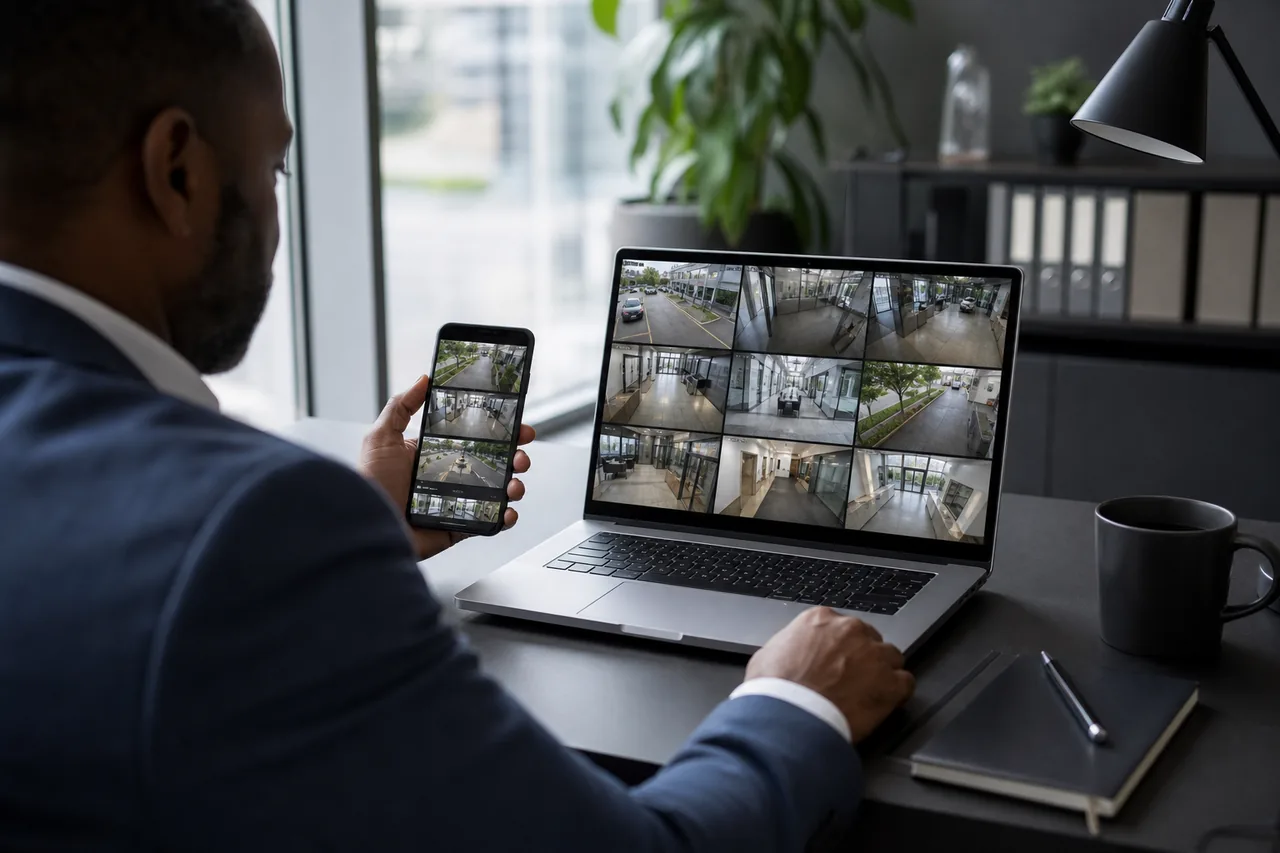
Video Playback & Retrieval
Authorised users reviewing stored footage and using supported playback or export functions to locate relevant incidents.
Your Video Monitoring & Recording Questions, Answered.
A video monitoring and recording system receives footage from compatible surveillance cameras, presents live video to authorised viewers and stores recordings for later playback. Depending on the platform, it may include DVRs, NVRs, video management software, storage equipment and remote-viewing features.
CCTV installation focuses on positioning and connecting the cameras that capture surveillance footage. Video recording system installation focuses on receiving, storing, managing and retrieving that footage. A complete surveillance project may include both services.
A Digital Video Recorder (DVR) commonly records footage from compatible analogue-based CCTV cameras. A Network Video Recorder (NVR) receives video from supported IP cameras over a network. The appropriate choice depends on the installed cameras, available connections and system requirements.
Integrated Solutions Technology provides Video Monitoring & Recording Systems as part of its Security & Surveillance services. Projects can include recorder selection, storage planning, installation, configuration and agreed operational checks.
Pricing depends on the type and capacity of recorder, number of camera channels, required storage, monitoring equipment, software licensing, installation conditions and additional features. An itemised quotation should identify the equipment and services included.
The retention period depends on camera count, recording bitrate, resolution, frame rate, compression, storage capacity and recording schedule. A required number of days should be specified so the equipment can be sized appropriately.
There is no universal answer. Storage needs vary considerably between systems. A few cameras recording intermittently at modest bitrates may use much less storage than numerous high-resolution cameras recording continuously. Capacity should be estimated from the actual configuration.
Yes, where supported by the selected equipment and available storage. Continuous recording generally requires more storage than event-triggered recording, although actual consumption depends on the video settings and scene activity.
Many compatible recorders support motion-triggered or event-based recording. However, detection capabilities and reliability depend on the equipment and configuration. Event-based recording may not capture every incident, so the recording strategy must suit the security requirements.
Yes. Compatible video monitoring systems commonly provide multi-camera layouts. The number of simultaneous views depends on the selected recorder, monitoring platform, display arrangement and available processing capacity.
Many systems support remote viewing through compatible applications or video management platforms. Secure remote access requires suitable networking, authorised credentials and supported equipment features.
Many DVR and NVR systems can record footage locally without an internet connection. Local viewing may also remain available. Internet access is generally needed for remote features that depend on external connectivity.
A recording system normally stops operating when it loses power unless suitable backup power is provided. The cameras, recorder and any essential network equipment must all be considered when planning backup power.
Existing cameras can be assessed for compatibility with a replacement or additional recorder. The outcome depends on camera technology, supported protocols, recorder capabilities, software licensing and available network connections.
Some recorders support larger compatible drives or additional storage, subject to manufacturer limitations. Others may require replacement or a different architecture. Existing recording requirements and hardware specifications should be reviewed first.
Video management software (VMS) is a platform used to organise and manage video from compatible surveillance cameras and recording systems. Depending on the product, it may provide live monitoring, playback, user administration, alarms, camera grouping and video export functions.
Some surveillance platforms support centralised viewing or management across multiple sites. Implementation depends on camera and platform compatibility, network bandwidth, connectivity, security requirements and applicable software licensing.
Many systems support authorised footage export to an appropriate file or storage device. Available formats, timestamps, integrity features and access restrictions vary by manufacturer. Evidence-handling requirements should be defined where recordings may be used in investigations.
Many recorders can overwrite older recordings when available storage is exhausted, depending on their settings. Retention and deletion arrangements should align with the organisation's documented policy and applicable legal obligations.
Neither is automatically better for every site. Local recording may provide greater independence from internet connectivity, while cloud services may offer additional offsite access or retention features. Costs, bandwidth, security, licensing, data location and service availability must be considered.
Access should be restricted according to the organisation's authorised roles and legitimate operational requirements. Systems that support individual accounts and permissions can help limit viewing, exports and administrative changes.
Where recordings contain identifiable individuals, applicable personal data protection obligations may arise. Organisations should consider lawful and transparent processing, appropriate security controls, access restrictions and a justified retention policy under the Nigeria Data Protection Act 2023 and relevant guidance.
No. Recording may be affected by camera coverage, lighting, equipment failures, power loss, storage settings or other factors. A monitoring and recording solution should be evaluated as one part of a wider security arrangement.
Existing recording systems can be assessed for suitable upgrades. Integrated Solutions Technology also offers Security System Maintenance & Upgrades, which can be discussed according to the installed equipment and agreed support requirements.
Useful details include your property location, number and type of cameras, existing recorder model, desired retention period, remote-viewing needs, monitoring arrangements and whether backup power or multiple-site access is required.
Contact Integrated Solutions Technology with your surveillance requirements and any details of your existing CCTV infrastructure. We can review the needs and discuss appropriate recording, storage and monitoring options.
Security Footage Is Valuable When You Can Use It.
Whether you're installing a new recording system, expanding CCTV storage or improving how your team views and retrieves surveillance footage, Integrated Solutions Technology can help you plan a suitable solution.